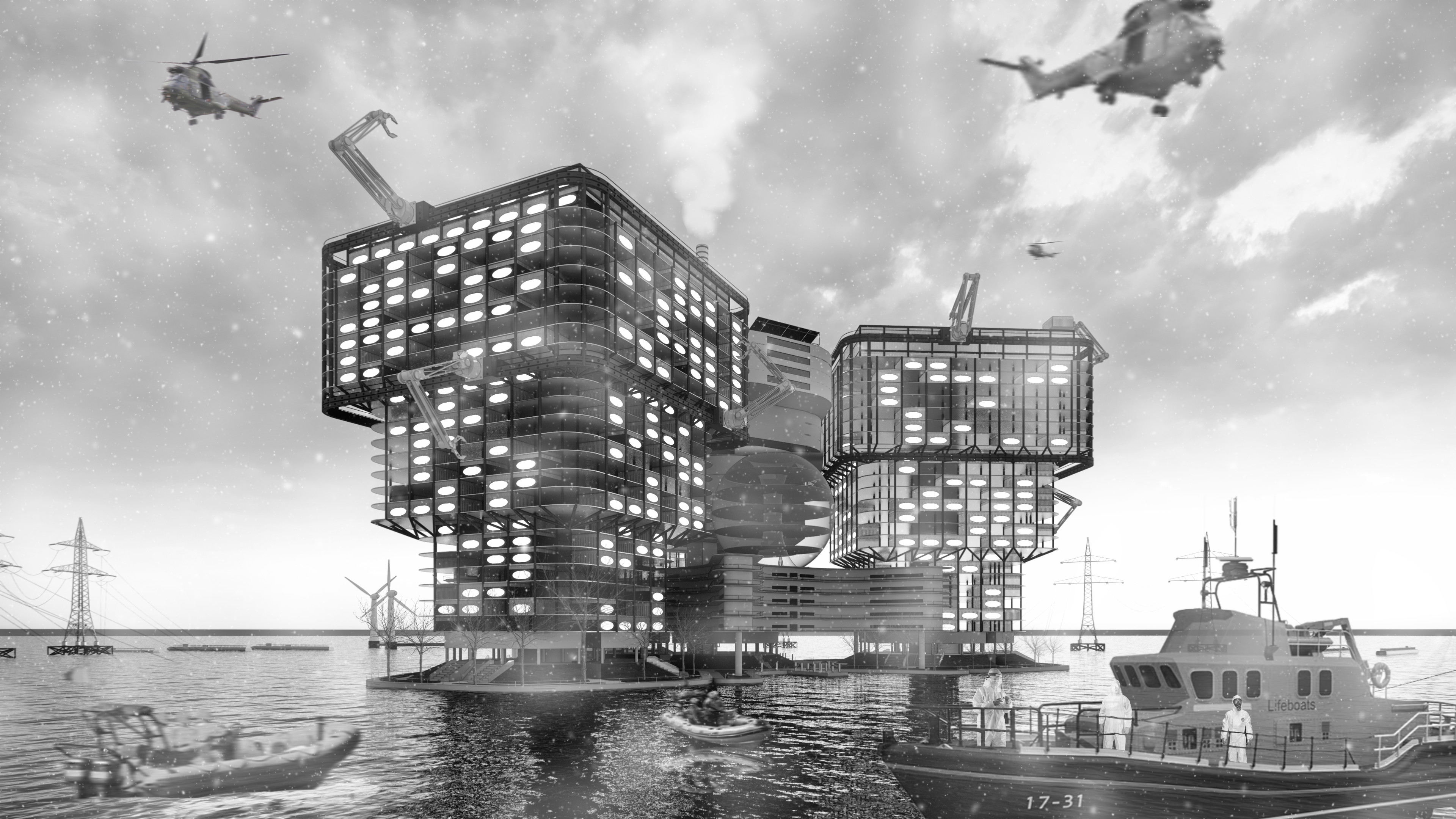
Amid the disaster of the COVID-19 pandemic, society attempted to control the spread of infection through measures such as mask mandates, gathering restrictions, and self-isolation. However, questions remain about whether these efforts were truly sufficient as long-term preventive strategies.
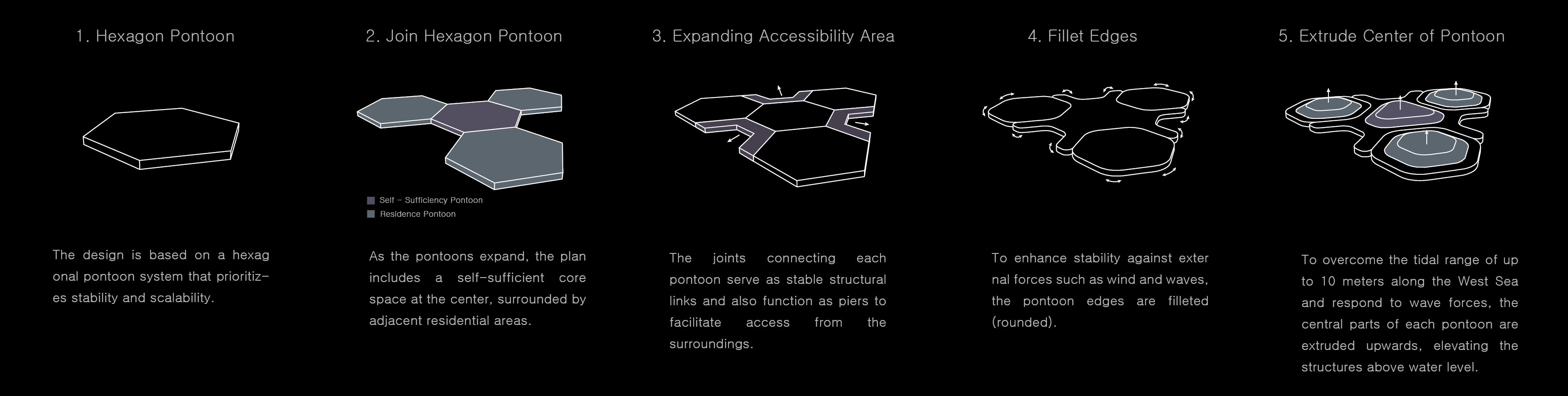
This project explores an alternative approach by focusing on physical isolation as a new spatial response to ongoing pandemics. It introduces a hexagonal modular system as the core design principle, offering scalability and flexible separation or combination. This structure aims to provide an effective and adaptable spatial solution for physical distancing in disaster scenarios.
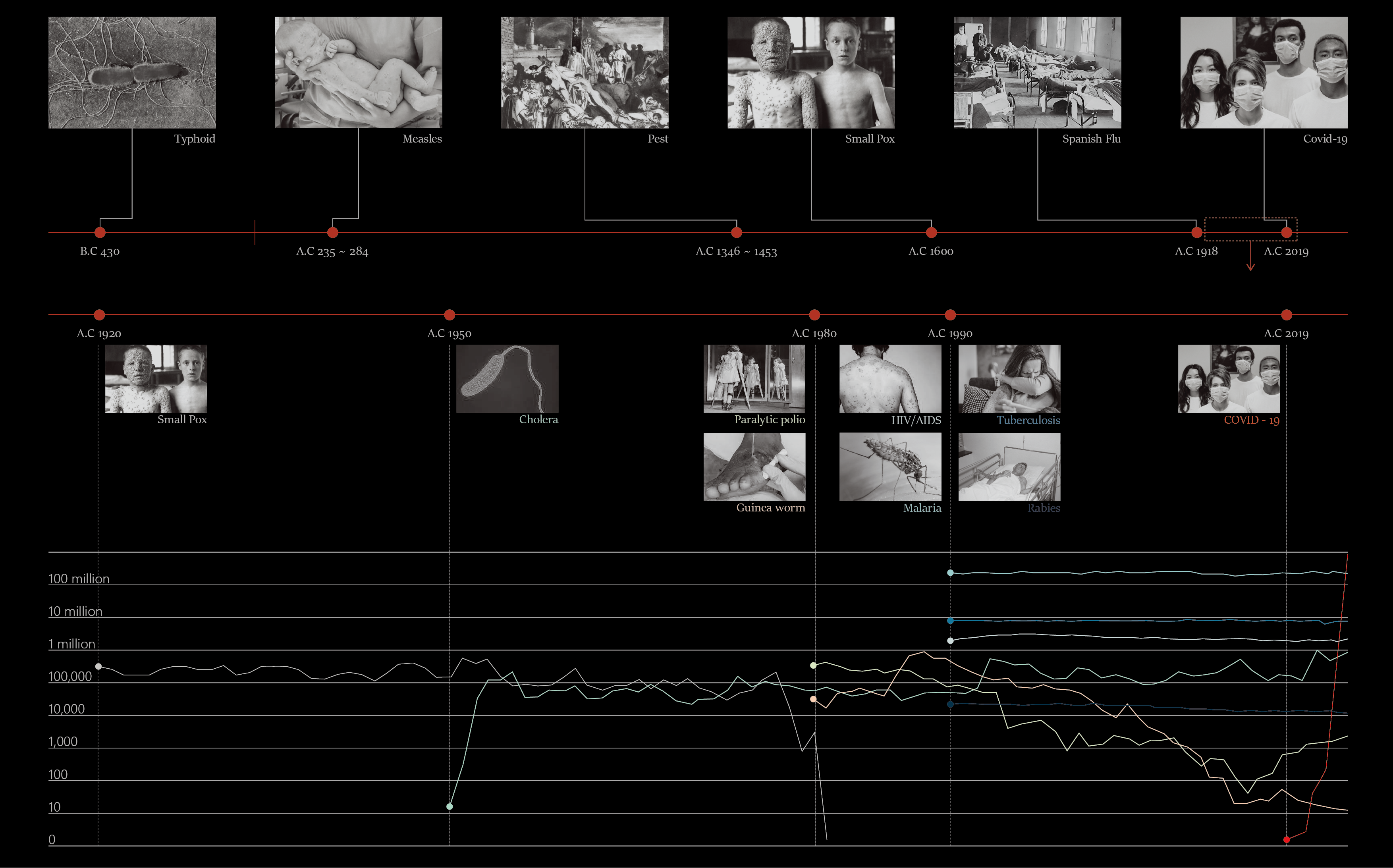
Throughout history, humanity has faced numerous infectious diseases — from typhoid and measles to the plague, and most recently, COVID-19. Regardless of the era, these epidemics have consistently posed serious threats to human health and life.
Notably, COVID-19 revealed that even with today’s advanced medical technology, overcoming a global pandemic is far from easy.
As we move forward, we will inevitably encounter new and potentially extinction-level pandemics. To prepare for such crises, we must begin to consider the need for alternative spaces — safe havens for survival and isolation.
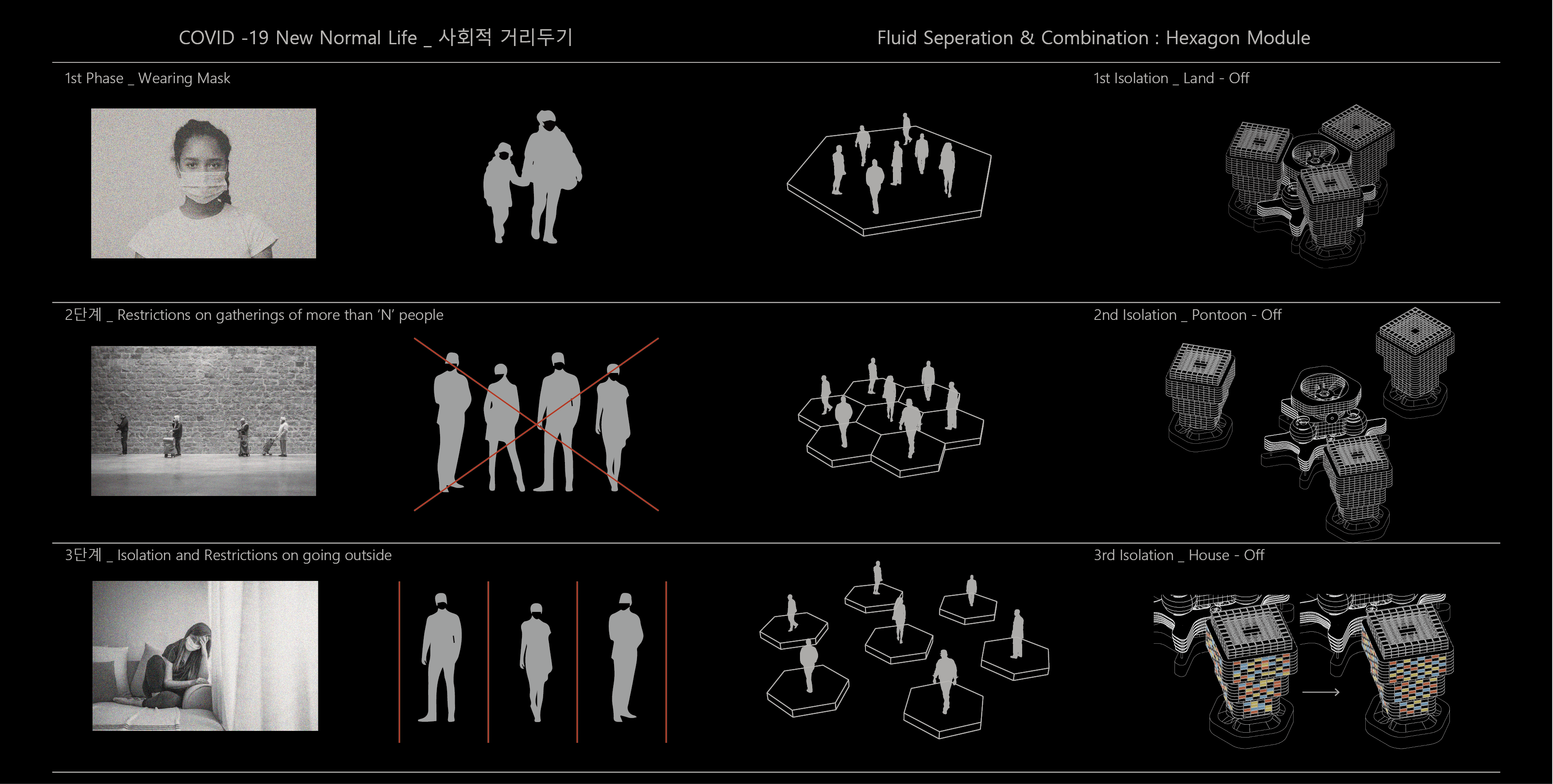
Amid the global crisis brought on by the COVID-19 pandemic, societies around the world implemented various countermeasures—from mask mandates and restrictions on gatherings to enforced quarantine and isolation—in an effort to curb the rapid spread of the virus. Yet, despite these collective efforts, the question remains: were such measures truly sufficient, especially in the face of long-term, recurring pandemics?
This project seeks to propose an alternative spatial response—one that reconsiders the very way we inhabit and separate space in times of infectious crisis. At the core of this proposal lies a hexagonal modular system, chosen for its scalability, structural stability, and flexibility of assembly and disassembly. Through this system, the project envisions the creation of adaptive, floating units that can be physically isolated when necessary, yet remain part of a larger, interconnected network.
By rethinking the boundaries between individual and collective space, this design offers not just a shelter, but a resilient spatial solution capable of responding to the uncertainties of future disaster scenarios.
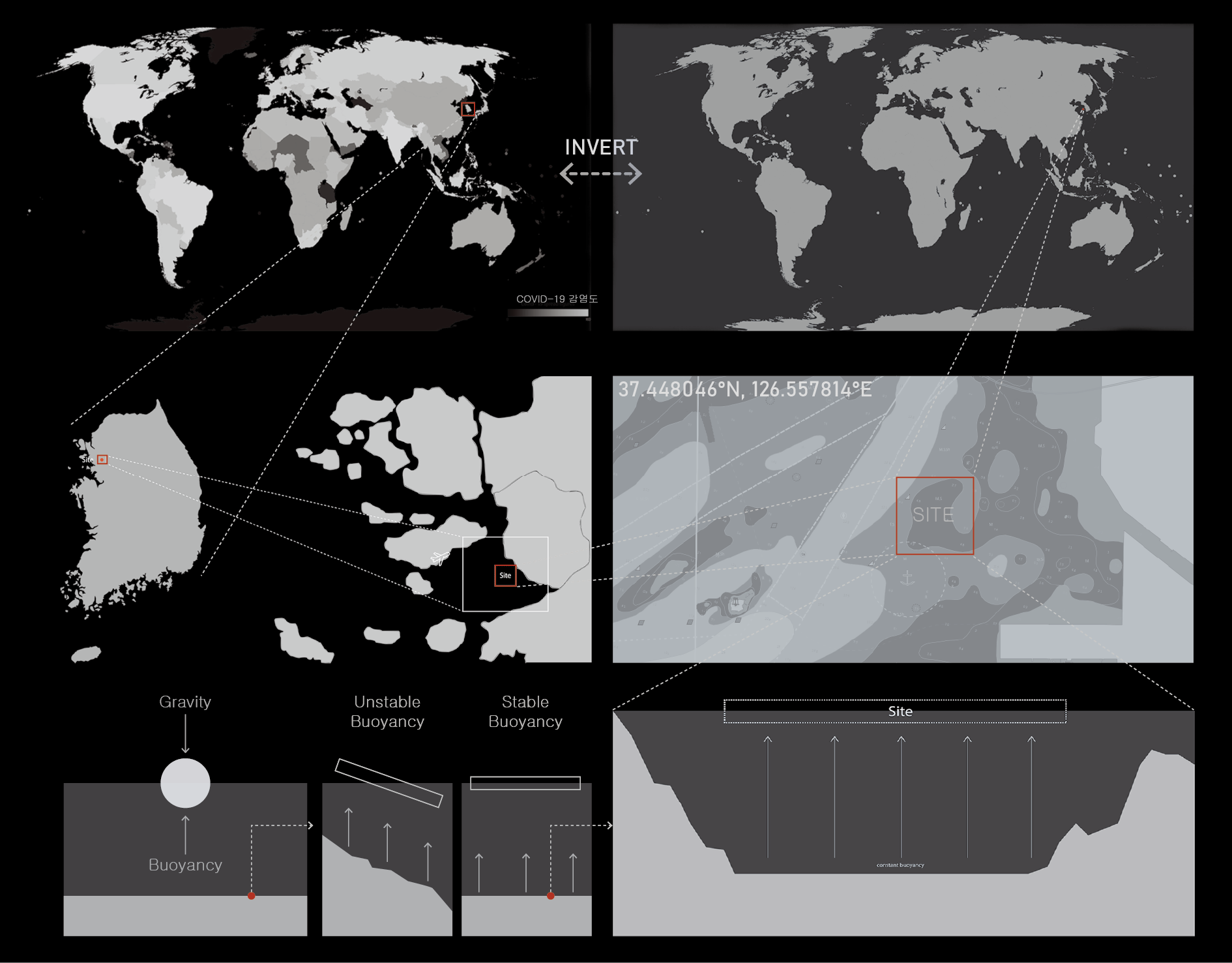
Through an analysis of COVID-19's infectious nature and spread patterns using spatial mapping, the sea was identified as a relatively safe and isolated environment, and selected as the initial site for physical isolation. This project envisions a new habitable land on water, providing a refuge from infection during pandemic disasters.
To ensure rapid deployment and flexible modular connections, buoyancy is introduced as a key structural force. The site at 37.448046°N, 126.557814°E was selected based on an accessibility study and an evaluation of seafloor stability using nautical charts.

Between A.D. 500 and 1300, the Ancestral Puebloans who lived in Mesa Verde were agricultural people cultivating crops such as beans, squash, and corn. While they initially settled on open land near water sources and farmland, they eventually relocated to the Cliff Palace, a sheltered cliffside dwelling, in order to protect themselves and their crops from the harsh desert sun.
Similarly, the open sea presents an environment fully exposed to direct sunlight, with no natural barriers for shade. Inspired by the Cliff Palace, this project proposes residential units that offer protection from intense solar exposure, even in the vast openness of the sea.
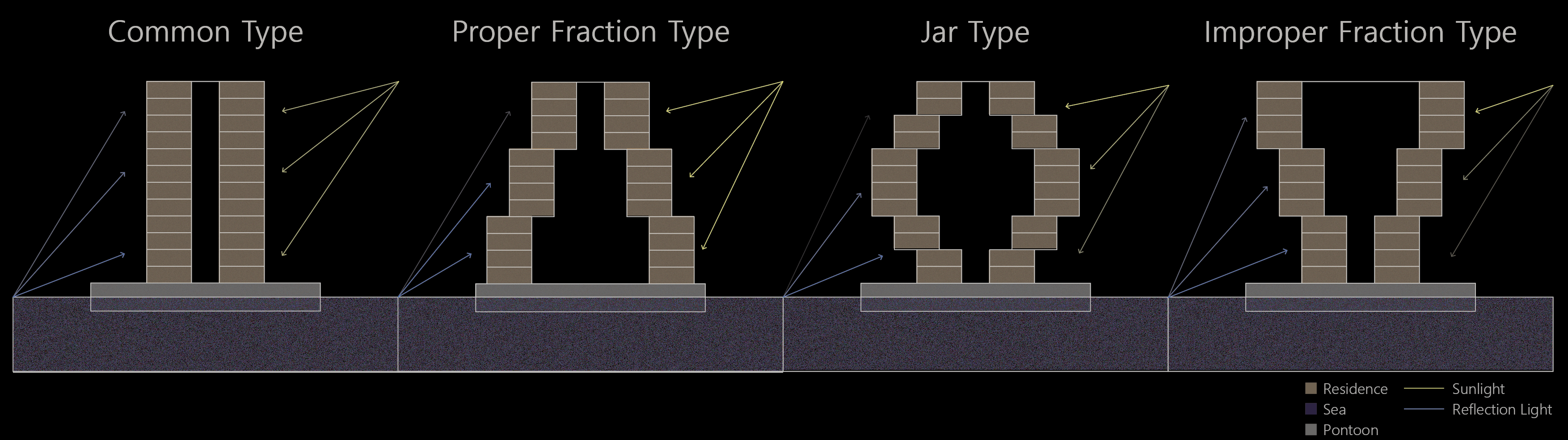
Following the classification of residential masses into four types, solar simulation studies were conducted, focusing on two critical factors: direct sunlight and reflected sunlight from the ocean surface.
While the reflected light provides soft, diffused illumination, contributing to stable natural lighting, the direct sunlight poses a challenge. In the open sea environment, where there are no surrounding obstructions, interiors are exposed to intense solar radiation, leading to a continuous increase in indoor temperature.
As a result, a reciprocal mass form—narrower at the top and wider at the base—was found to be the most suitable for habitation, effectively mitigating heat gain while optimizing daylight performance.
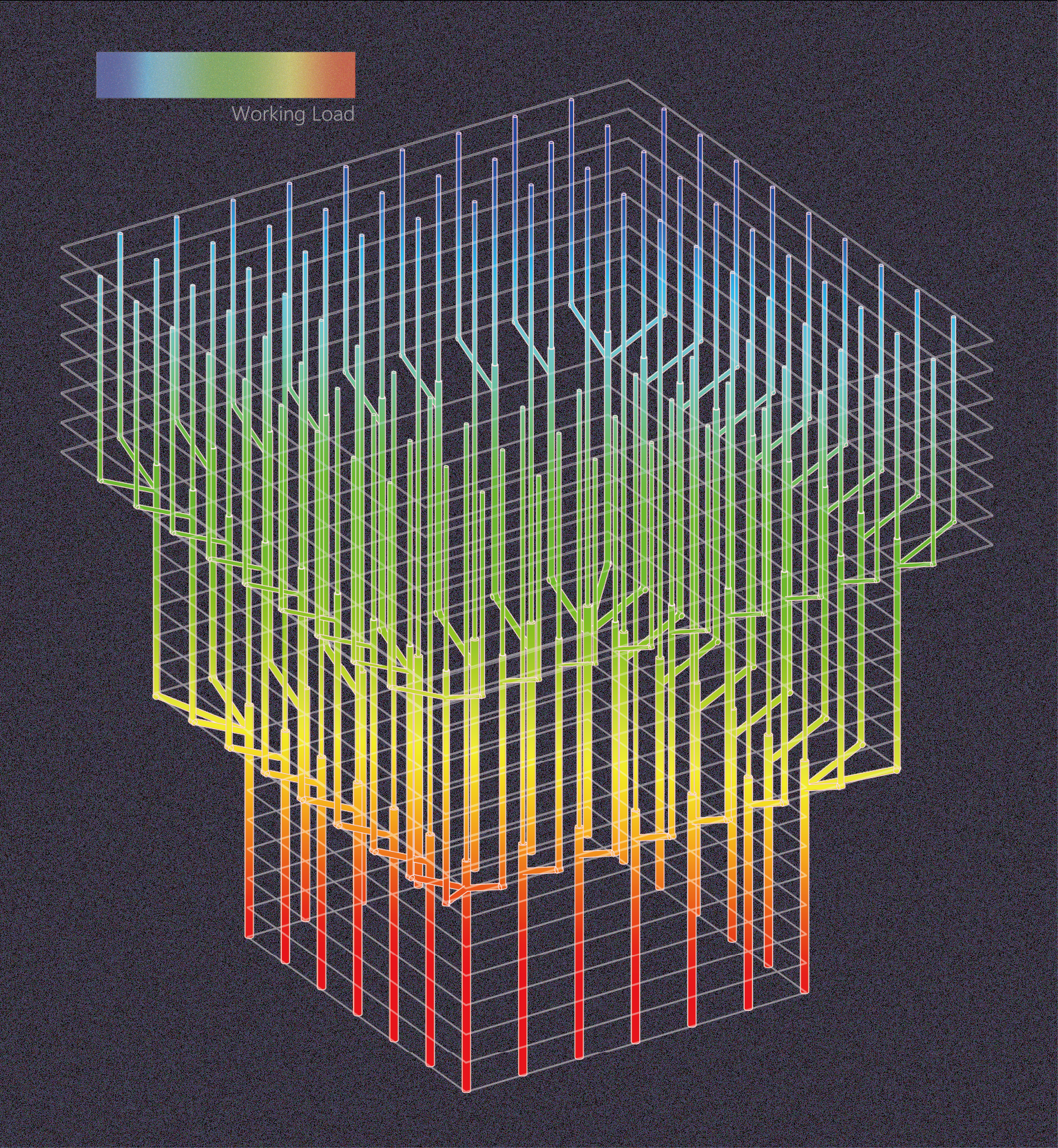
In the Improper Fraction Type residential mass, structural loads are transmitted through a series of cylindrical columns anchored to the pontoon base.
These columns are arranged in sequential diameters of 500mm, 750mm, and 1000mm, allowing the load to be gradually and stably distributed toward the pontoon.
Once transferred, the load is evenly dispersed across the entire pontoon, enabling the floating structure to maintain consistent buoyancy and overall stability.
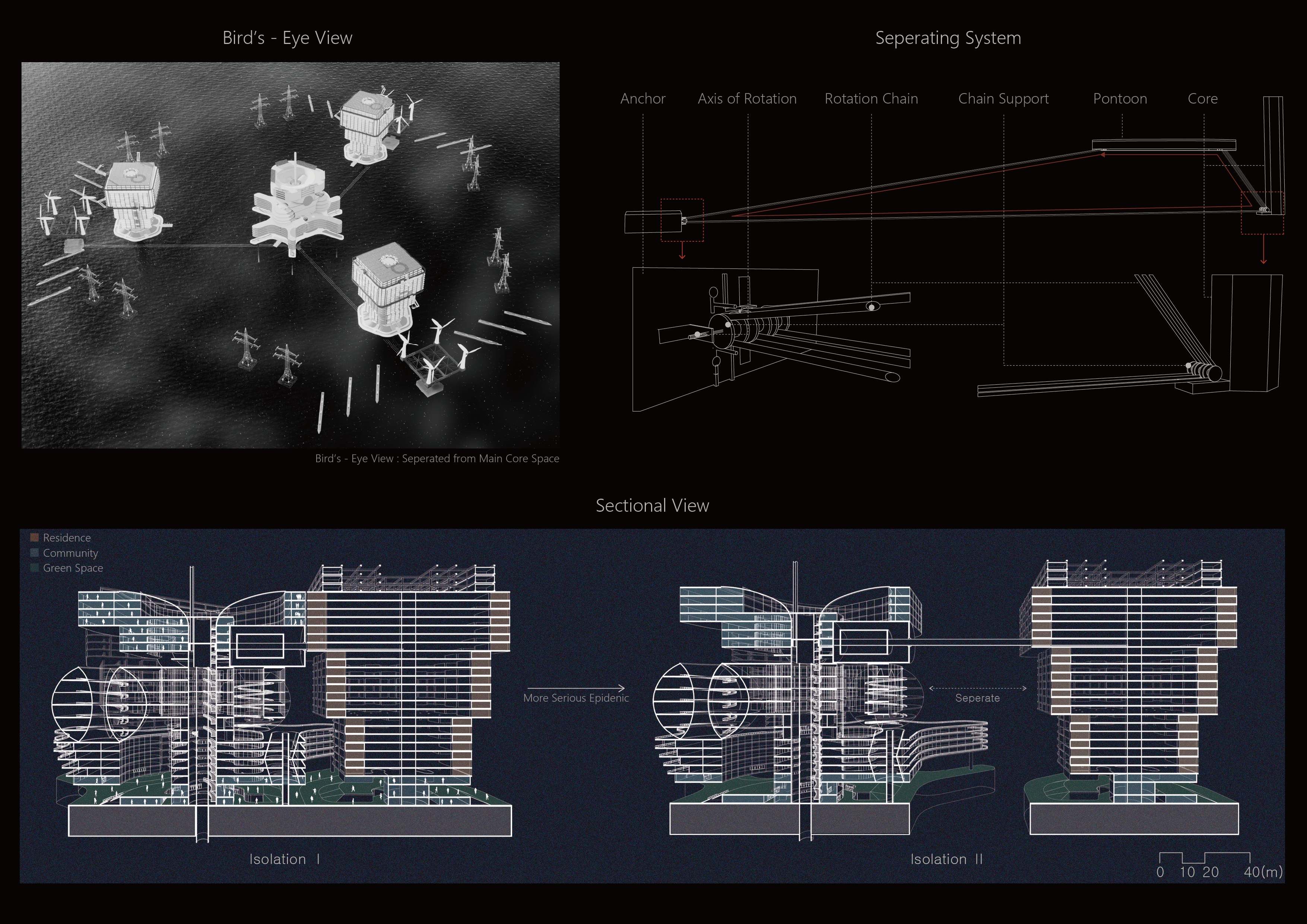
Isolation Phase II begins as the pandemic situation worsens. Following the initial escape to a "new land," a second layer of physical isolation is implemented within the system.
Each residential unit on the pontoon is mechanically separated from the central core via a rotating system, enforcing spatial disconnection. This mechanism not only enables controlled quarantine, but also serves as a practical solution for maintenance and operational independence between the core and surrounding units.
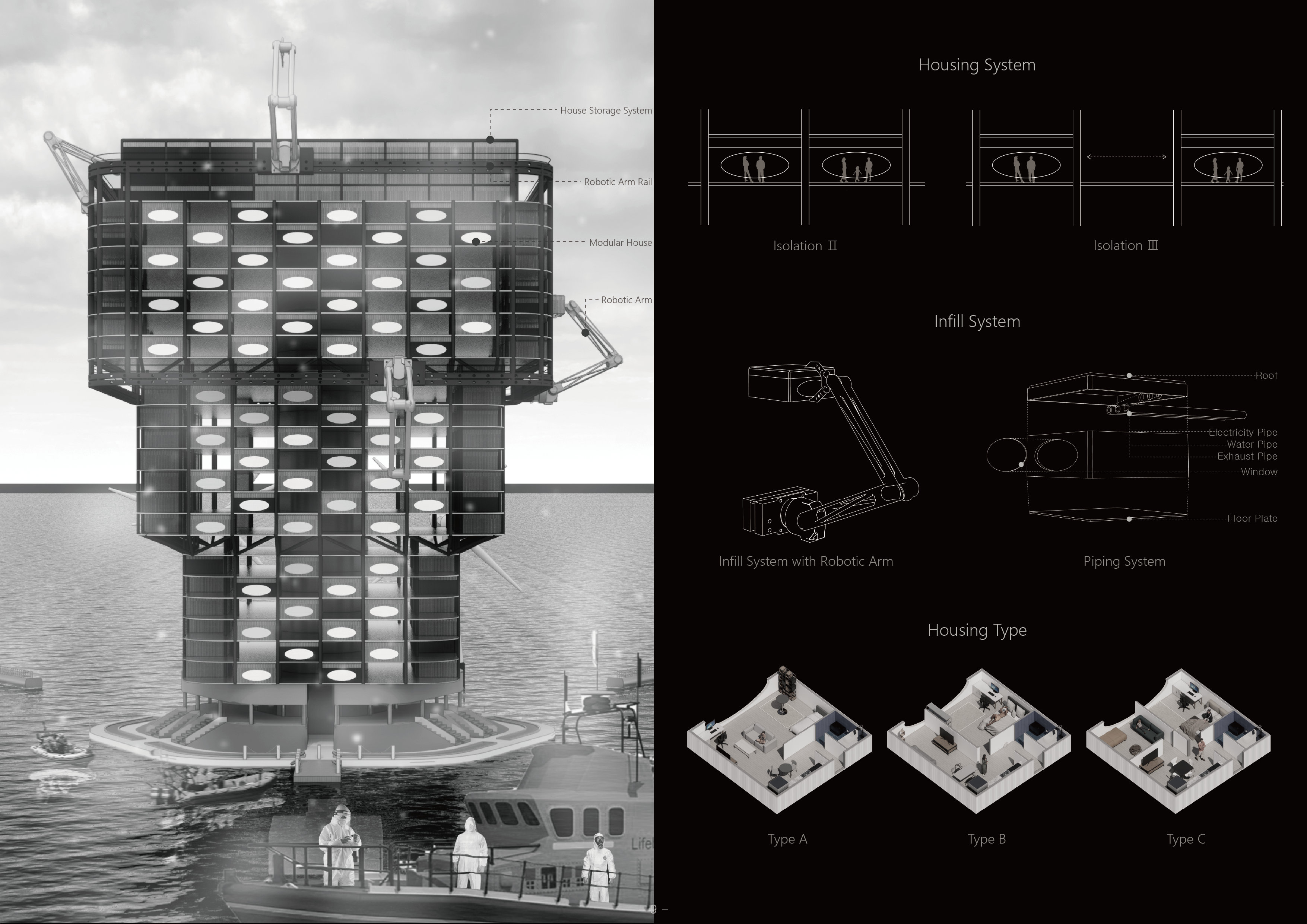
Isolation Phase III is applied under conditions where a pandemic reaches its most critical stage. After achieving secondary isolation through the separation of floating units, this phase introduces individual household-level separation to minimize any remaining risk of infection.
Based on a modular housing structure, each unit can be moved and reconnected without direct human interaction through dedicated module storage and a robotically controlled connection system.
This approach enables complete physical disconnection between living units, while maintaining continuity of residence and spatial flexibility even in severe outbreak scenarios.
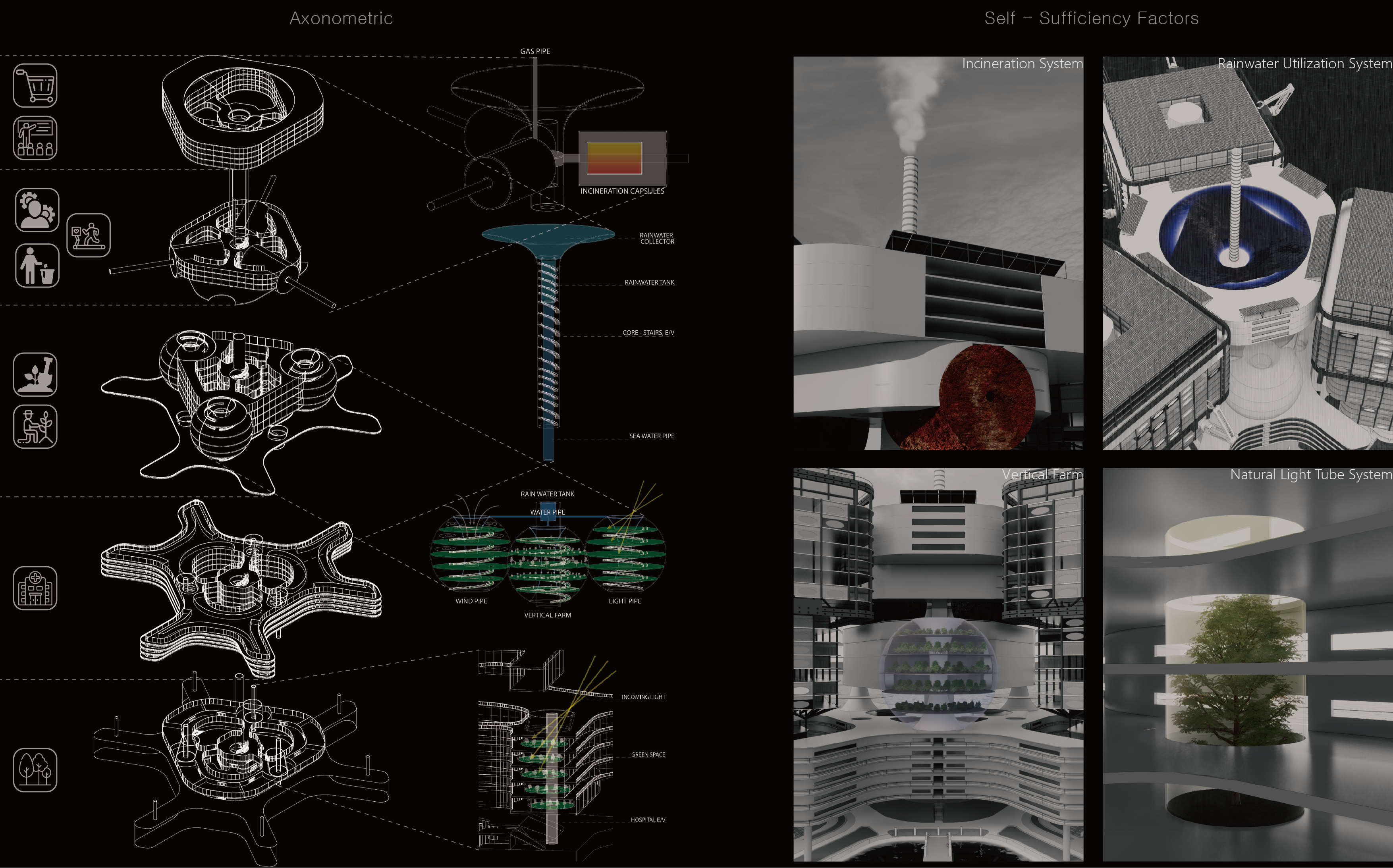
The central core serves as the operational hub of the entire floating city. In Isolation Phase I, this core hosts essential programs such as education, healthcare, public health, and community functions, strategically positioned at the junctions where it connects with residential units, allowing the system to operate as a self-contained city.
Given its complete separation from land, the city is designed to achieve a high level of self-sufficiency, incorporating circular farms, ecological green zones, rainwater harvesting systems, and waste incineration facilities.
All of these programs are developed as modular units, enabling continuous maintenance, adaptation, and scalability.
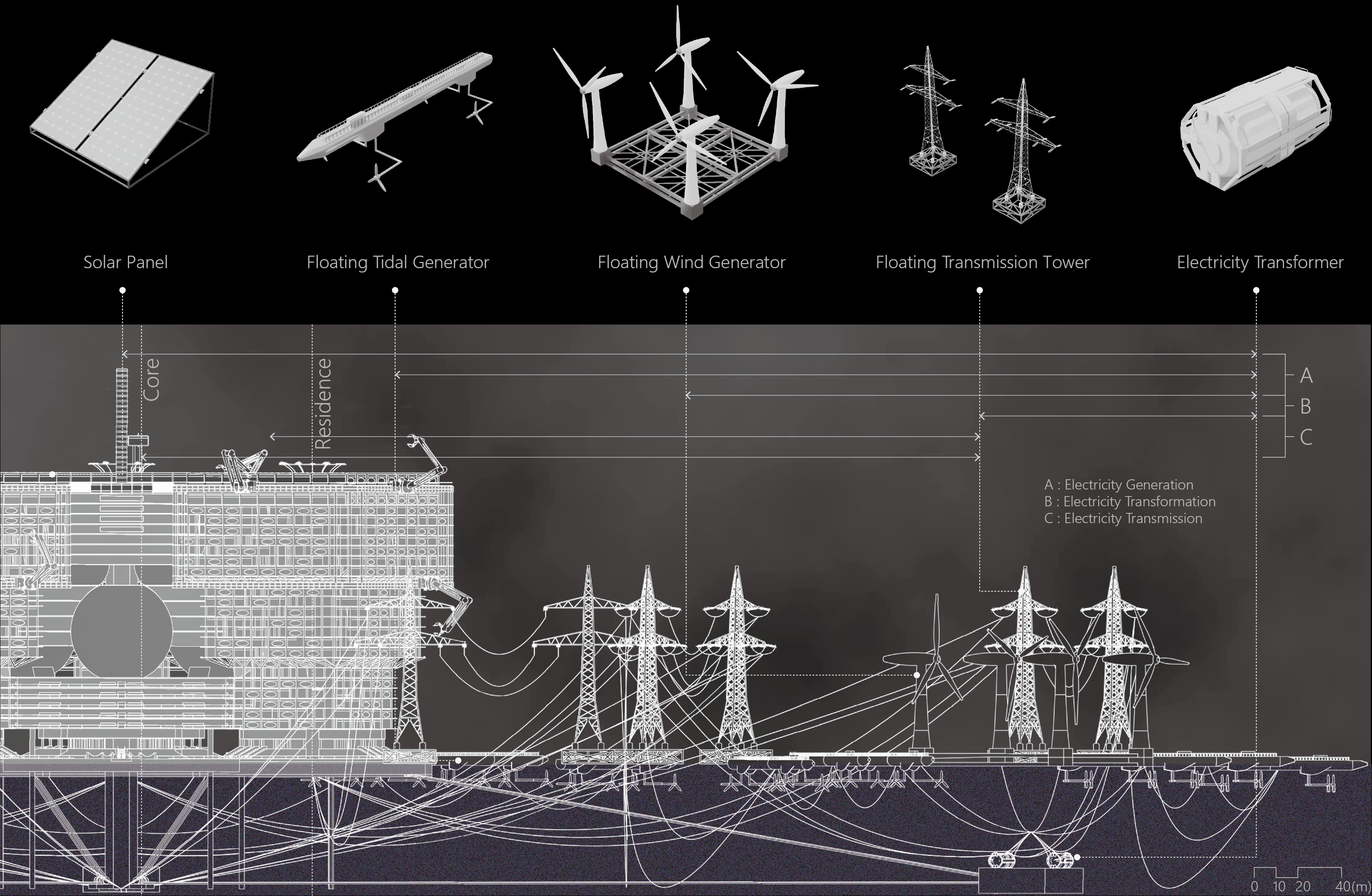
To support life in a completely independent environment from the mainland, the electrical system is designed to operate as autonomously as possible.
Primary sources of energy include floating wind turbines, floating tidal generators, and solar panels. Electricity is generated and regulated through a combination of embedded generators and floating substations.
This infrastructure forms a radial power grid system centered on the core, with high scalability, allowing it to define and expand the boundaries of the floating city.
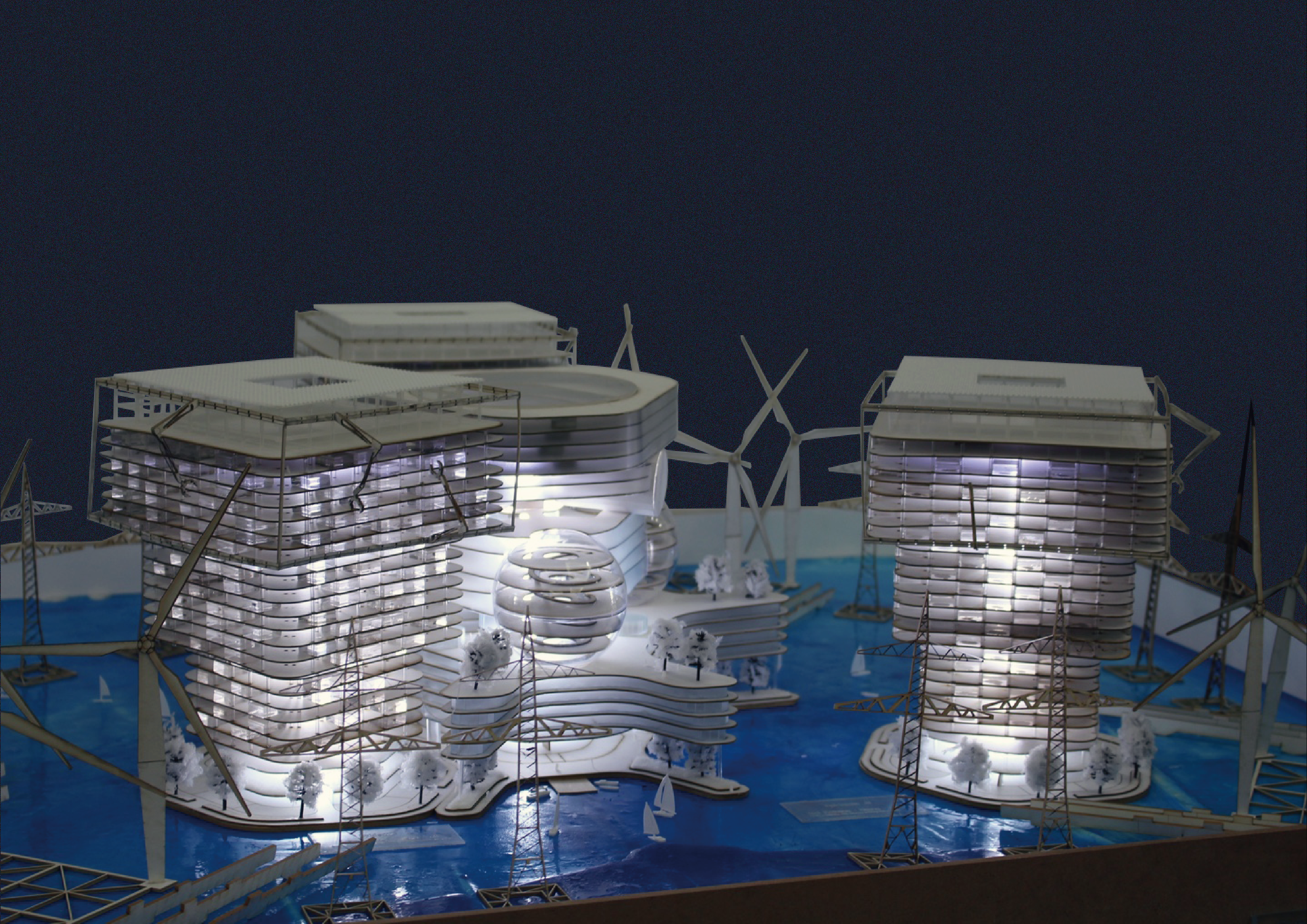
This project, conducted from March to July 2021, was initiated as a speculative architectural response to potential future pandemics of extreme severity.
Having lived through COVID-19, society collectively experienced various preventive measures—social distancing, lockdowns, mask mandates—that reshaped our perception of everyday space. These experiences opened up new possibilities for imagining how we might confront future outbreaks, and this project began from that shared awareness.
The core idea is straightforward: “What if physical distancing could be spatially reinforced through multiple phases—would it become a more effective way to contain infection in severe pandemic conditions?” From this question, key architectural strategies emerged: pontoons for floating infrastructure, modular systems for flexibility, and self-sufficiency for isolated living.
These ideas were developed into a spatial framework that balances isolation and connectivity, adaptability and control, forming the basis of a new urban structure. More than just a pandemic response, this project proposes an alternative vision for future habitation and urban systems, reconsidering how architecture can respond to global crises while redefining the boundaries of human dwelling.