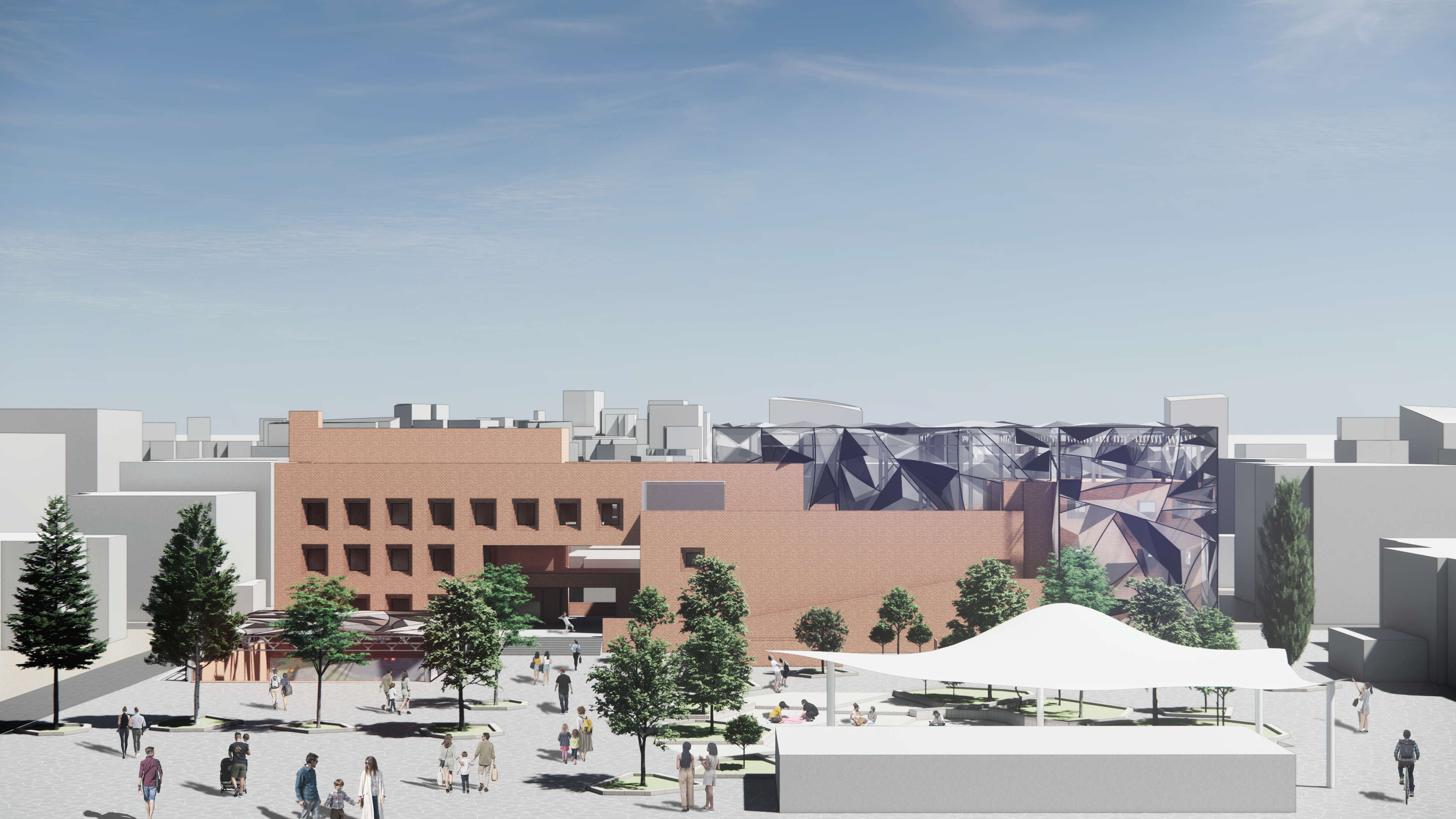
Located near Hyehwa Station at the heart of Daehak-ro in Seoul, the ARKO Art Center has long served more as a space of passage than a true destination. In the wake of the COVID-19 pandemic, the cultural and commercial vitality of Daehak-ro has declined, leaving the ARKO Art Center and Marronnier Park increasingly isolated within the urban fabric.
This project proposes a bold reimagining of the center as the ARKO e-Sports Stadium, a cultural facility centered around a new artistic medium: gaming.
By repositioning the museum as a destination rather than a detour, the proposal aims to revitalize the area with youthful energy and a contemporary cultural pulse, transforming ARKO into a dynamic hub at the intersection of art, technology, and urban life.
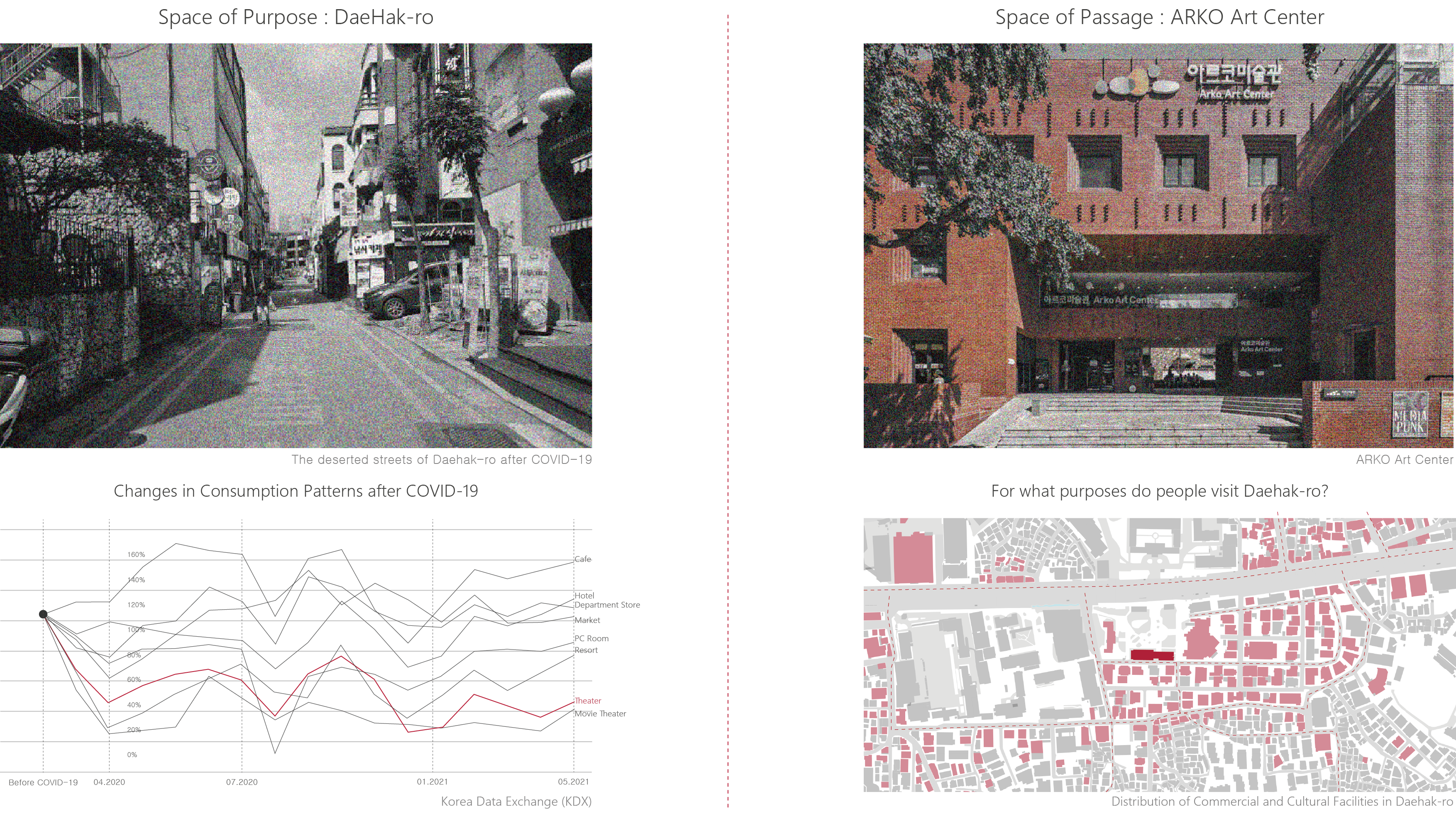
Daehak-ro has long thrived as a cultural and artistic hub, with a vibrant economy shaped largely around theater and live performances. However, in the aftermath of the COVID-19 pandemic, restrictions on face-to-face interaction drastically altered consumption behavior, leading to a decline in theater attendance and a sharp downturn in the local economy.
Many theaters were forced to close, and what was once a bustling street filled with energy and youth has now become quiet, sparse, and increasingly desolate. Located at the heart of Daehak-ro, the ARKO Art Center continues to exist within this shifting landscape, but it functions more as a space of passage than a true destination.
While Daehak-ro still attracts visitors through its diverse mix of cultural and commercial venues, most come for specific purposes such as attending a play or visiting popular restaurants. Few make the journey to Daehak-ro with the ARKO Art Center as their primary destination. As a result, the museum now finds itself gradually sidelined, its role diminished in tandem with the broader decline of Daehak-ro’s cultural vitality— left behind as a solitary structure within an increasingly fragmented urban fabric.
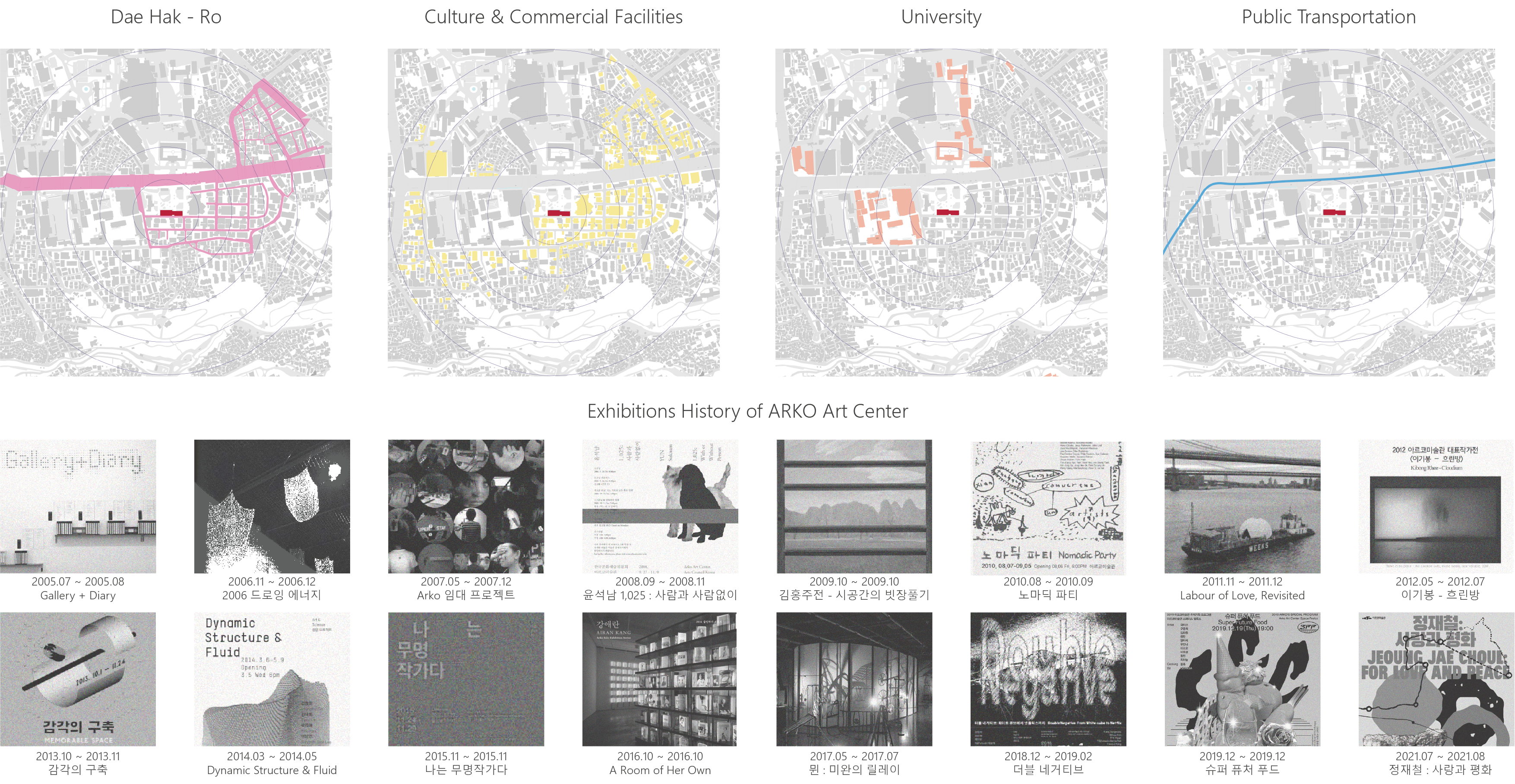
Daehak-ro is a vibrant district known for its cultural and commercial facilities, youthful energy, nearby universities, and excellent accessibility. At its very center lies the ARKO Art Center, a space that has long pursued the goal of democratizing art and culture. Through a wide array of exhibitions in fields such as visual arts, literature, and architecture, ARKO has sought to introduce diverse cultural experiences to the public, with a particular focus on emerging artists and inclusive programming.
However, most exhibitions held at the museum have taken the form of free or permanent displays, and have typically been small in scale. As a result, the ARKO Art Center has often been perceived not as a true destination, but rather as a transitional space—a place briefly passed through on the way to other venues in Daehak-ro. This perception risks undermining the museum’s identity, reducing it to a neutral, indistinct exhibition space that lacks a compelling purpose.
Now is the time to redefine ARKO as a space with clear intention and presence a place that not only attracts visitors in its own right, but also generates positive ripple effects within the broader neighborhood and cultural ecosystem. To achieve this, the museum must cultivate its own distinctive content something that sets it apart, draws people in, and repositions it as a vibrant cultural landmark in the heart of Daehak-ro.
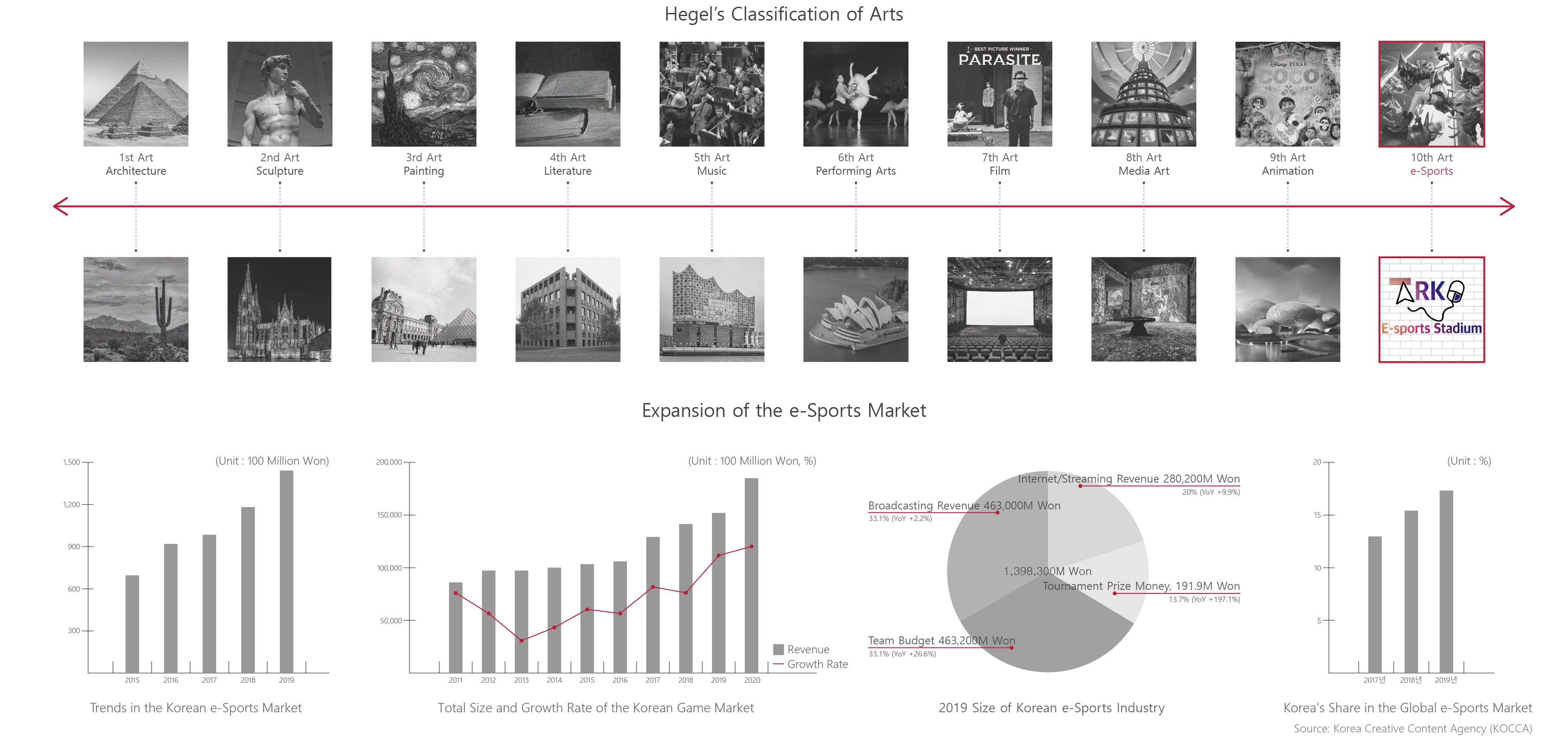
Western philosopher Hegel categorized the arts into ten stages, expanding the definition of art beyond traditional forms like painting, music, and architecture to include media art, comics, and even games. According to this view, every art form requires a space where it can be experienced and appreciated. For instance, architecture needs land to build upon, painting requires exhibition space, and music calls for venues to perform or listen.
In the same vein, the gaming industry—particularly the field of e-Sports—is rapidly growing, with South Korea recognized as a global powerhouse in this cultural domain. Today, e-Sports is no longer seen as mere entertainment, but as an emerging form of cultural art, demanding professional and immersive spaces for its consumption.
This project proposes to revitalize ARKO Art Center, located in the heart of Korea's cultural district, by introducing e-Sports as a new artistic content. In doing so, the museum will transform from a space of passive transit to a destination for cultural engagement, redefining its role in the urban and artistic landscape.
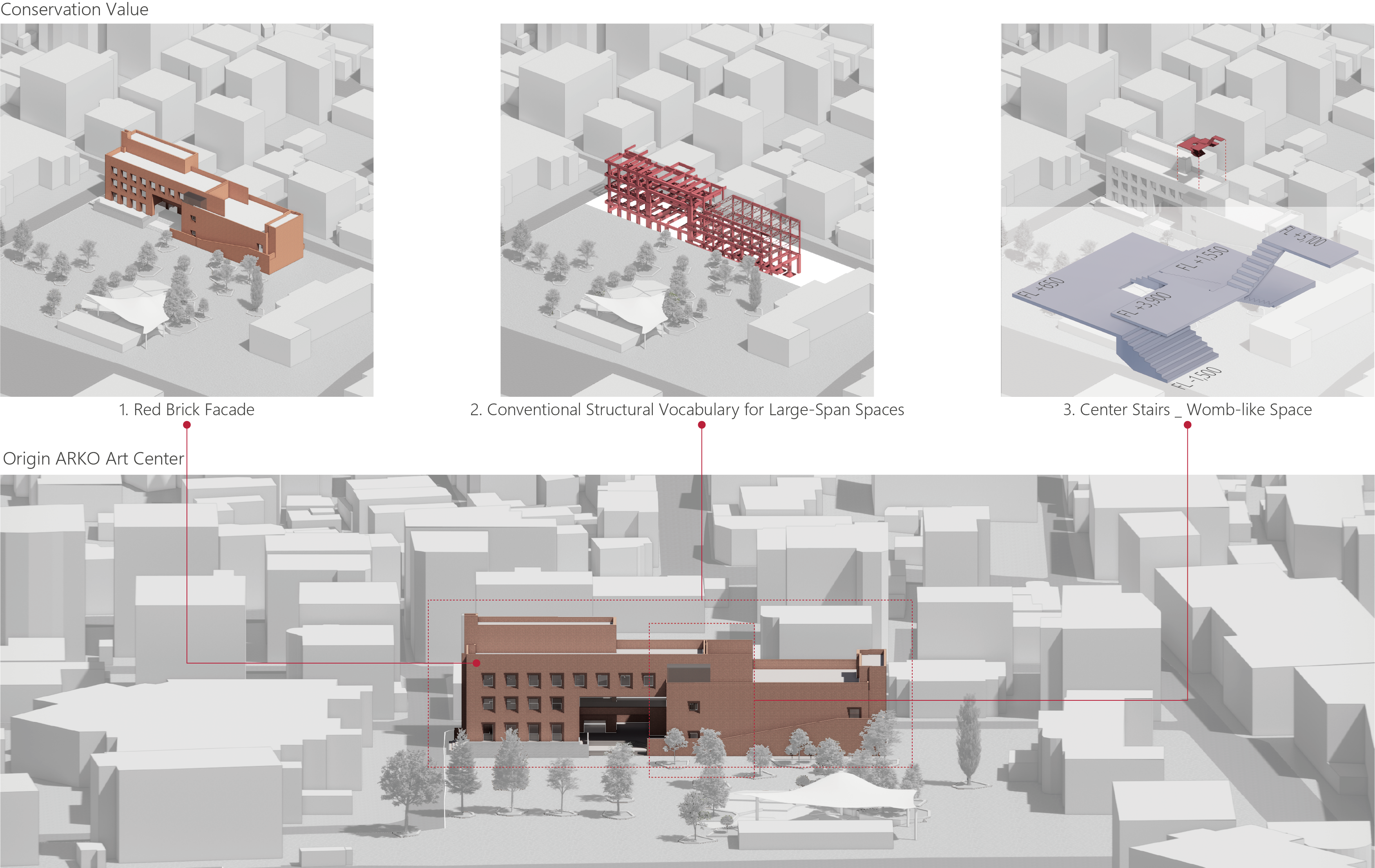
In remodeling the ARKO Art Center into an e-Sports stadium, three key architectural elements were identified for preservation.
First, the red brick façade, a defining feature of the building and a visual landmark in the Daehakro area, holds significant historical and contextual value and must remain untouched.
Second, the existing structural system, particularly the long-span exhibition space, offers a spatial vocabulary that can be effectively adapted to support the new program of e-Sports.
Lastly, the “womb-like space”—a central, enclosed area organized around a staircase—was originally envisioned by architect Kim Swoo-geun as a calm, intimate zone that connects all parts of the building. Preserving its spatial identity is essential to maintaining the spirit of the original design.
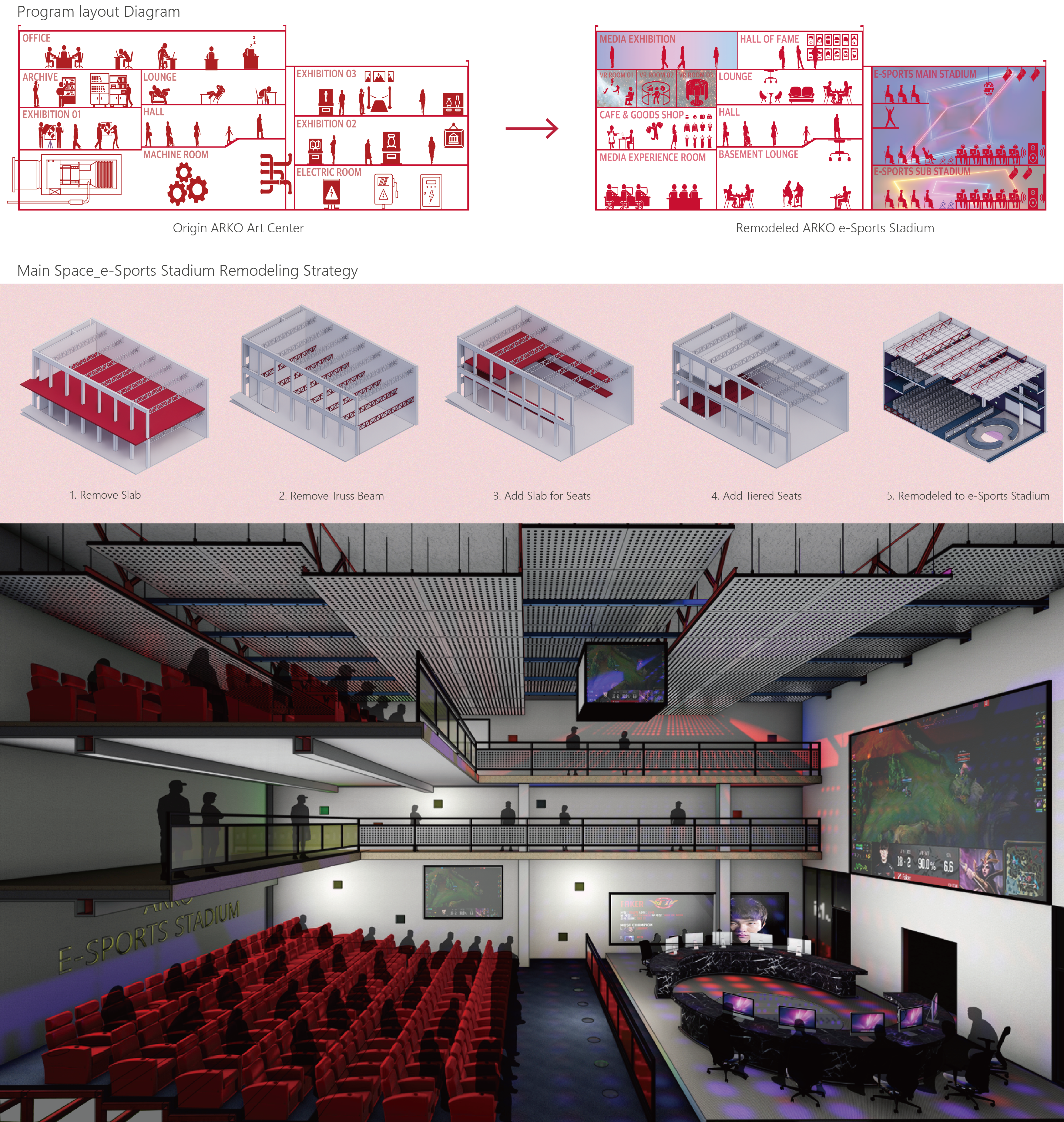
To transform the ARKO Art Center into an e-Sports stadium, the existing building was first analyzed and reorganized programmatically. The structure is divided into two wings: the right wing, with its high ceilings and long-span structure, was designated as the e-Sports arena, while the left wing was planned for interactive and experiential programs.
The core strategy for the arena focused on maximizing seating capacity while ensuring optimal sightlines for players, spectators, and broadcasting screens. To achieve this, the existing second-floor slab and beams were removed, and two new slabs were inserted to accommodate tiered seating. The supporting beams and terminal columns were structurally reinforced to bear the new load. Additionally, the ground floor was reconfigured with stadium-style seating, and a new interior and ceiling design was introduced to enhance the spatial atmosphere suitable for an e-Sports venue.
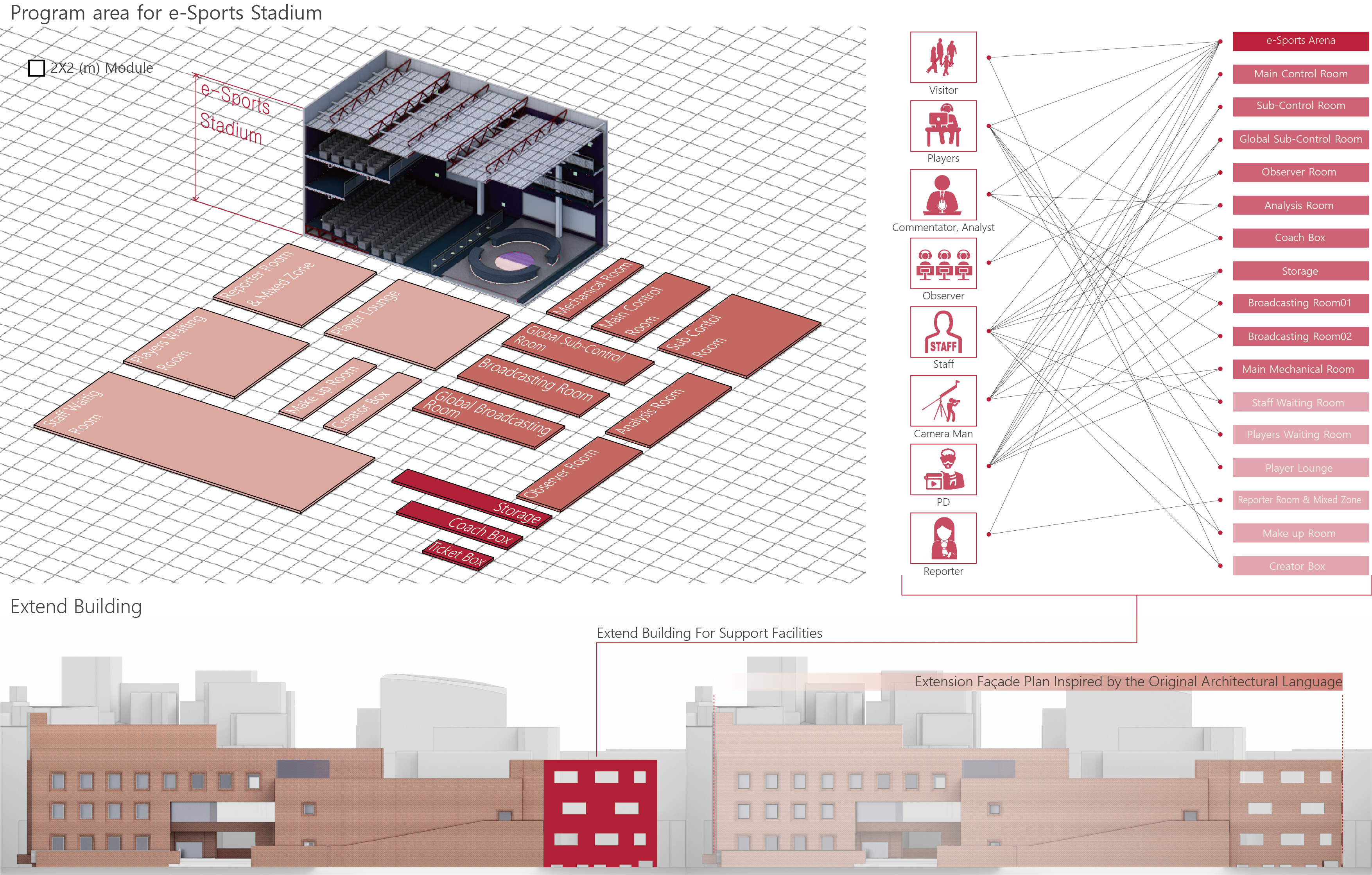
The current plan includes the e-Sports stadium and cultural facilities related to it. However, additional support spaces are required to manage the facility and host various events within the stadium. Since the existing ARKO Art Center lacks the capacity to accommodate these functions, a horizontal extension has been proposed to incorporate auxiliary programs.
In designing this annex, spatial zoning and area calculations were conducted based on the diverse user types and the relationships between them, ensuring logical connectivity and efficient space allocation. Moreover, the extension's façade and material finishes were carefully designed to reflect the architectural language and identity of the original ARKO Art Center, maintaining a sense of continuity and cohesion between the old and new structures.
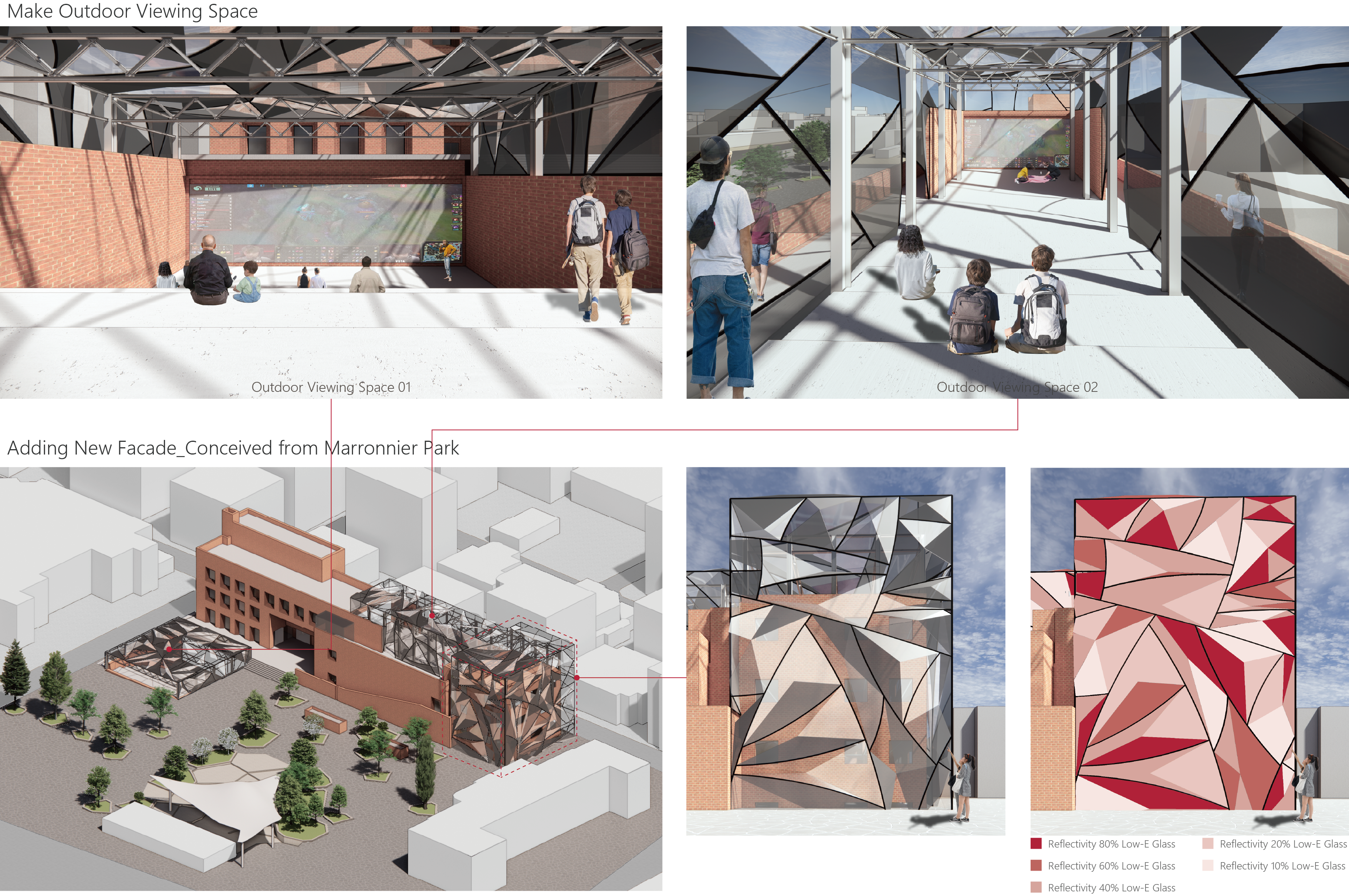
To enhance connectivity with the surrounding Daehak-ro district and Marronnier Park, two outdoor spaces have been newly introduced. These spaces function not only as entry points to the building but also serve as open-air viewing and gathering areas.
To visually and spatially integrate these outdoor spaces with the horizontally extended volume, a new façade design has been proposed. This design is inspired by the fractal patterns found in the natural forms of Marronnier Park. It is constructed through a structure resembling randomized branching systems, combined with glass panels of varying reflectivity, created using a random algorithm-based generation method. This layered design preserves the architectural identity of the existing structure while adding a gem-like, luminous quality to the exterior, thereby reinforcing its new identity as an e-Sports arena.
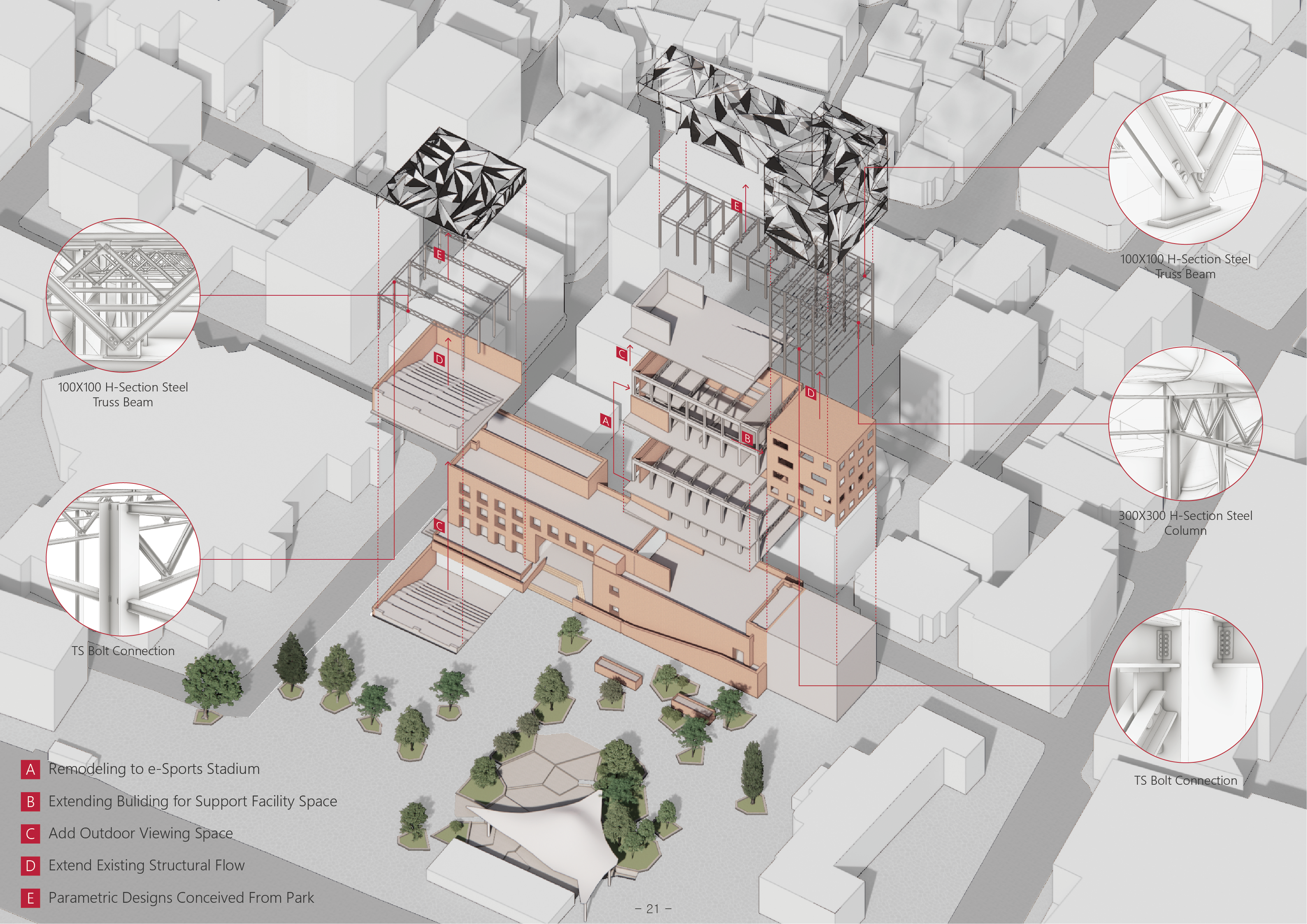
In the remodeling process, the structural design aimed to retain the architectural language of the original building as much as possible. The newly added volume was therefore designed with a full steel-frame structure, with each member dimensioned based on load-bearing calculations, including span and thickness. All primary joints were reinforced using TS bolt connections to enhance structural strength.
Architecturally, the extension integrates the original brick façade, new glass curtain wall, and exposed steel members, intentionally combining them to create a cohesive and expressive architectural identity.
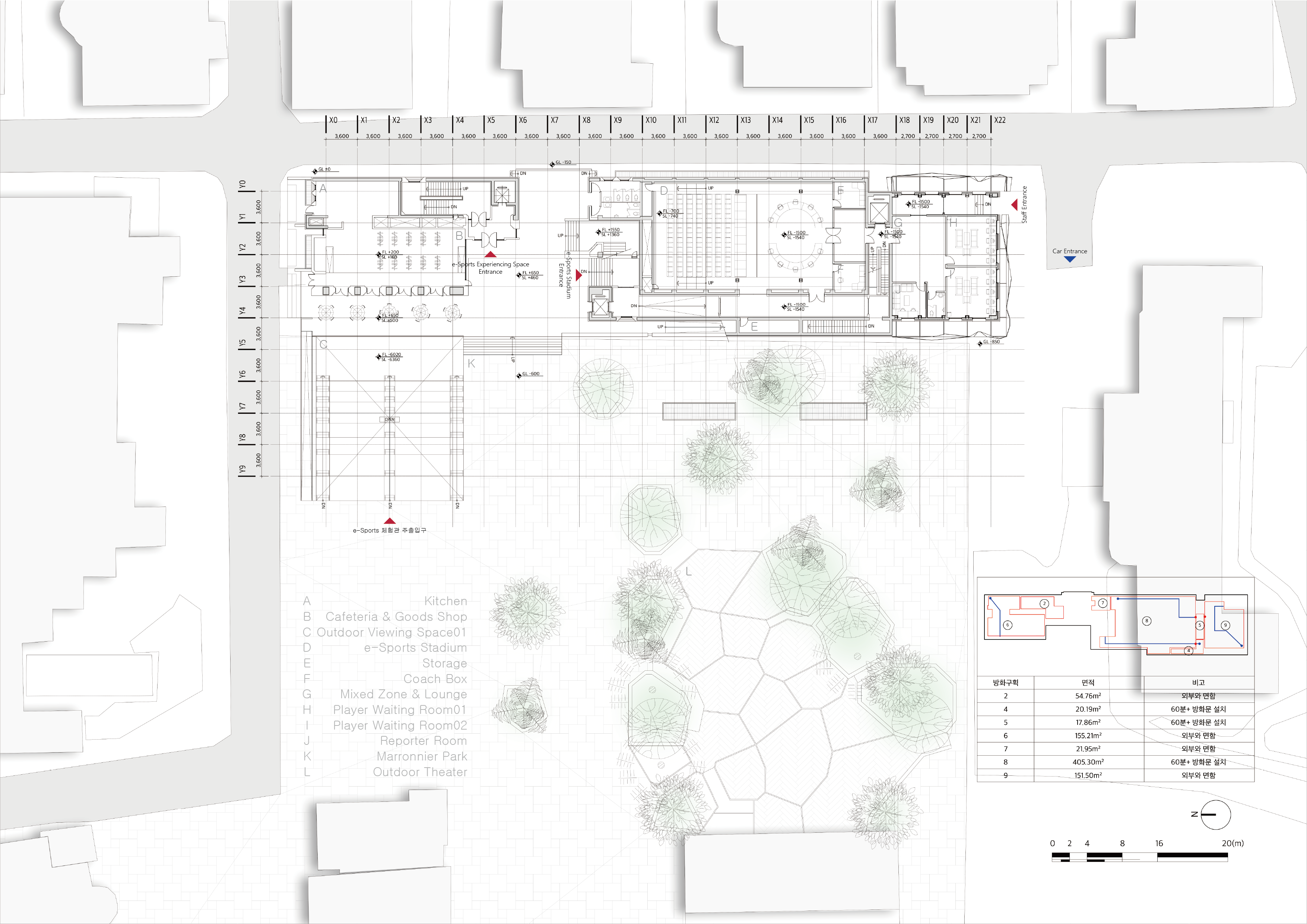
The first-floor layout prioritizes the clear separation of circulation paths between general users and staff, ensuring efficient access aligned with each building wing’s program. Additionally, the ground level was designed to be as open as possible, allowing multiple points of entry and encouraging a natural flow into the interior spaces.
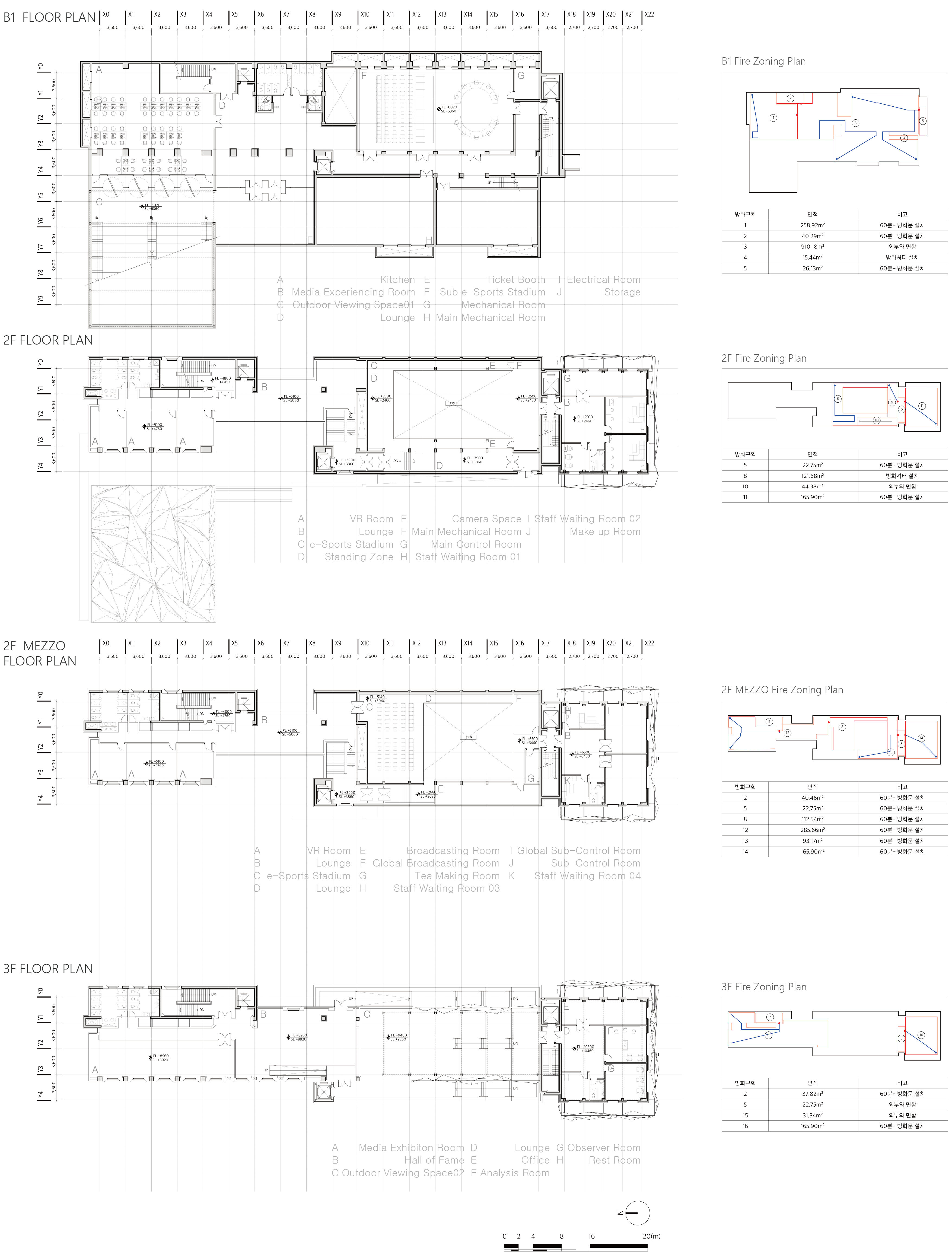
The primary focus of the ARKO e-Sports Stadium design is twofold: to maximize user engagement with the facility, and to ensure a clear separation between user and staff circulation for optimal spatial efficiency.
The existing building has been reimagined as a space for consumption, experience, and viewing, inviting users through naturally connected pathways from Daehak-ro and Marronnier Park.
Meanwhile, the new annex is designed exclusively for staff and support functions, with careful consideration given to its connectivity to the main stadium and the flow between internal programs. This approach not only maximizes circulation efficiency, but also ensures privacy where needed.
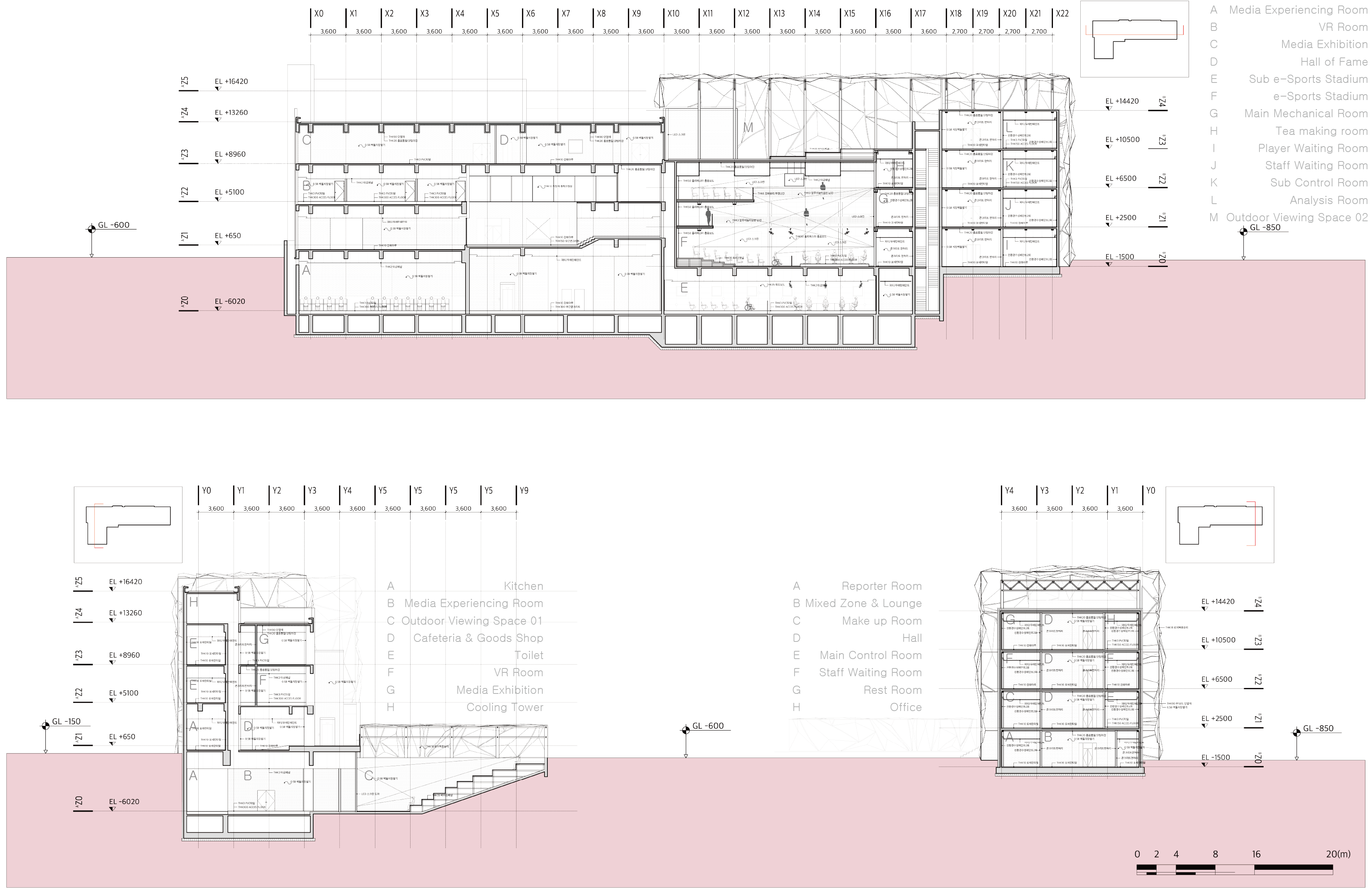
The section diagram reveals the spatial relationships between the different program zones. The building is composed of three main volumes: the left wing and right wing of the existing structure, and the newly expanded annex.
The left wing hosts experience- and retail-oriented programs, the right wing is dedicated to e-Sports stadium seating and gameplay viewing, the annex functions as a support zone for staff and operations.
These three volumes are clearly divided by function, and the circulation between the existing building and the annex is intentionally separated to improve operational efficiency. At the lower level, multiple entrances are created from various directions to allow for natural and fluid access into the building.
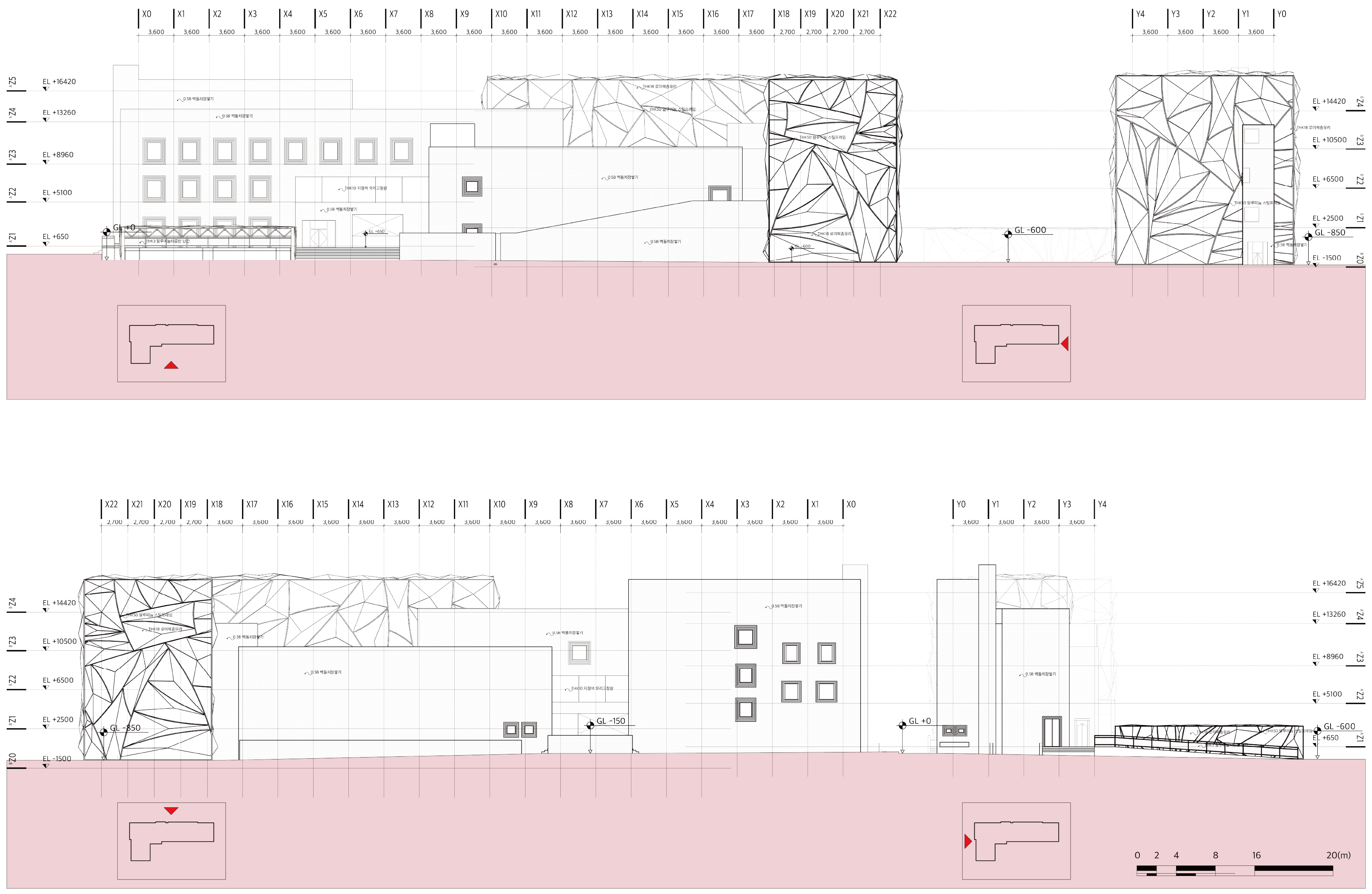
The iconic identity of the original ARKO Museum facade lies in its layered, segmented masses and the use of red brick cladding. This proposal seeks to preserve these defining elements while introducing a new architectural identity.
Without disrupting the hierarchy of the original massing, additional facade volumes are introduced, incorporating a fractal-inspired pattern derived from the branching forms of Marronnier Park’s trees. The randomized pattern, generated by algorithmic variation, casts shadows that visually extend the park into the interior of the building.
Furthermore, glass panels with varying reflectivity are used to express the futuristic nature of e-Sports as a new cultural content. By combining preservation with innovation, this design aims to establish a new urban landmark in the heart of Daehak-ro.
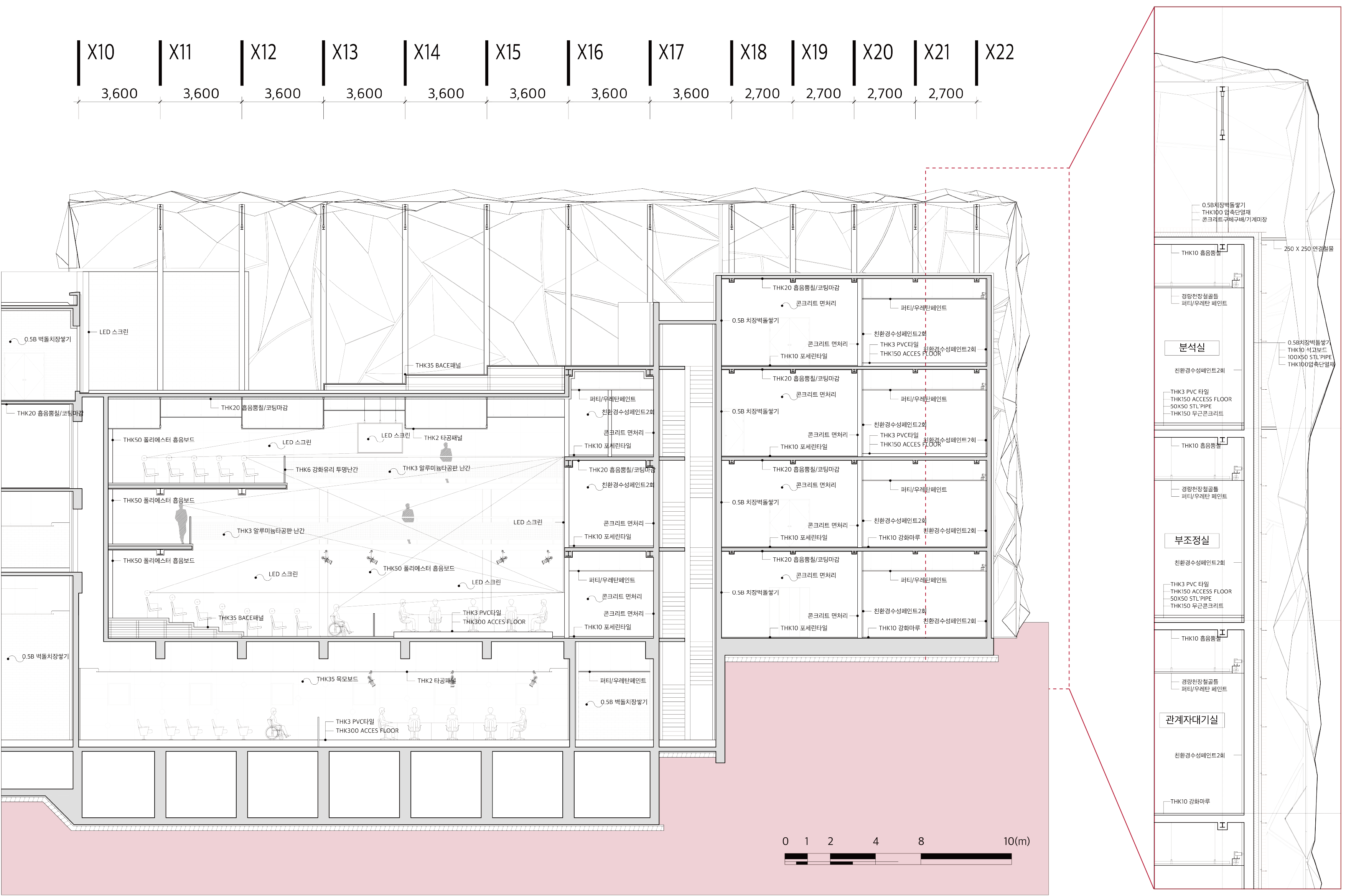
This sectional detail illustrates the design of the e-Sports stadium and the glass façade.
Within the stadium, the section is planned to maximize the viewing angle toward the main screen, ensuring it remains the central visual focus for the audience while also accommodating the maximum number of spectators. Interior finishes are carefully selected to optimize acoustic performance. Polyester acoustic panels are applied to the walls to reduce sound reflection and enhance audio clarity, while perforated ceiling panels, arranged in a zigzag pattern, contribute both to sound absorption and a dynamic lighting design. Ample mechanical space is provided above the ceiling to support a wide range of lighting and audiovisual equipment.
For the glass façade, a prefabricated steel frame is designed to hold individually assembled glass panels, allowing for efficient on-site construction. The steel framework is structurally integrated with the building's primary frame, ensuring overall stability.