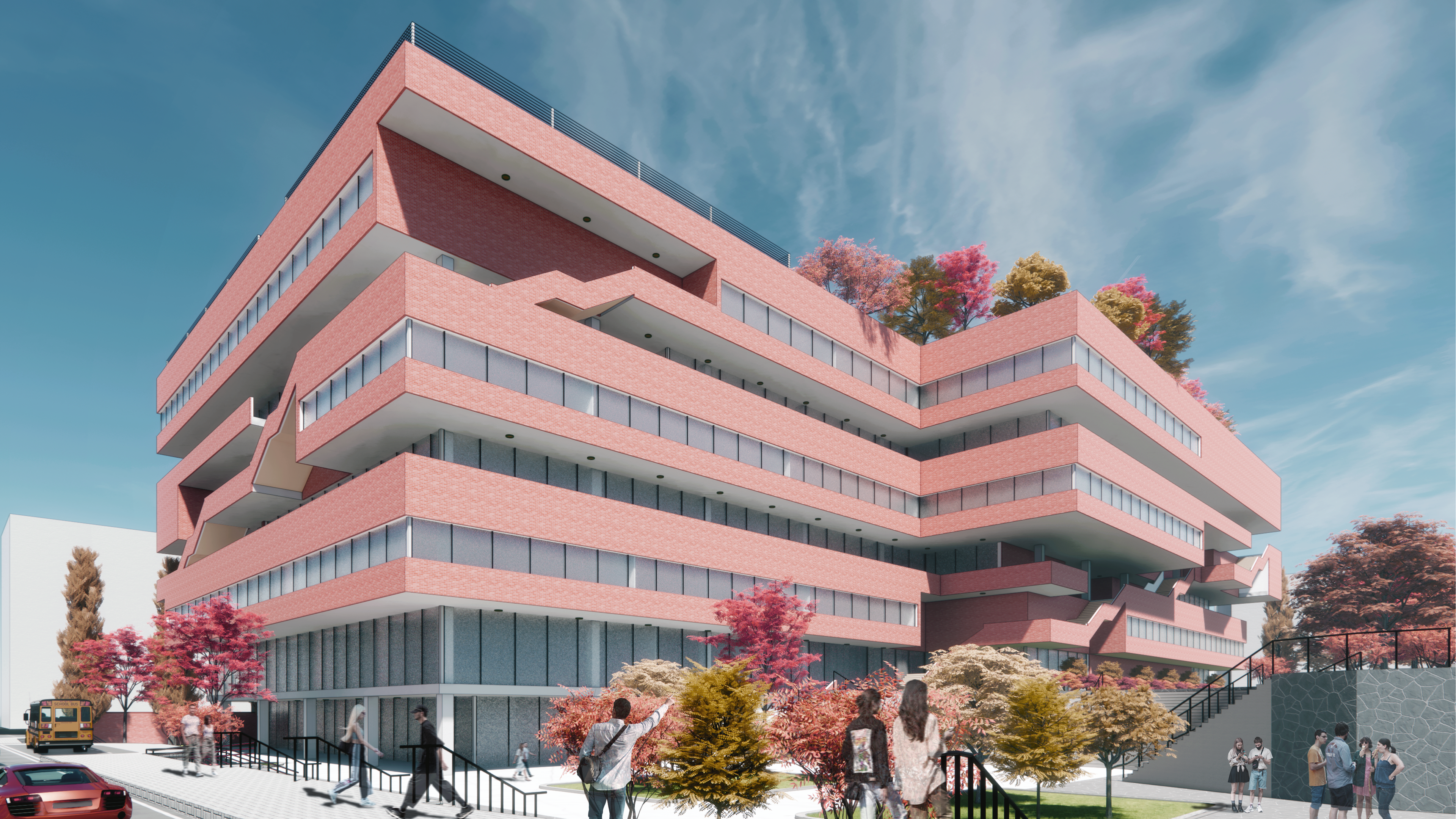
‘Flat - S’ stands for “Flat Seo-gu” and “Flat House.” This concept originates from my personal experience. Have I ever felt truly comfortable inside a government building beyond fulfilling administrative tasks? Have I ever explored and utilized the space freely beyond the service counters?
This project began with such questions and aims to redefine the role of the public office. Today’s district office should go beyond being a space for administrative tasks—it should serve as a platform for communication with residents, a catalyst for community engagement, and a space that enhances operational efficiency.
In order to break away from the rigid and closed-off image of traditional government buildings and create a space that is welcoming, open, and accessible to everyone, this project proposes four core strategies under the concept of “Flat” : Space Flat, Vertical Flat, Green Flat, and Red Flat.
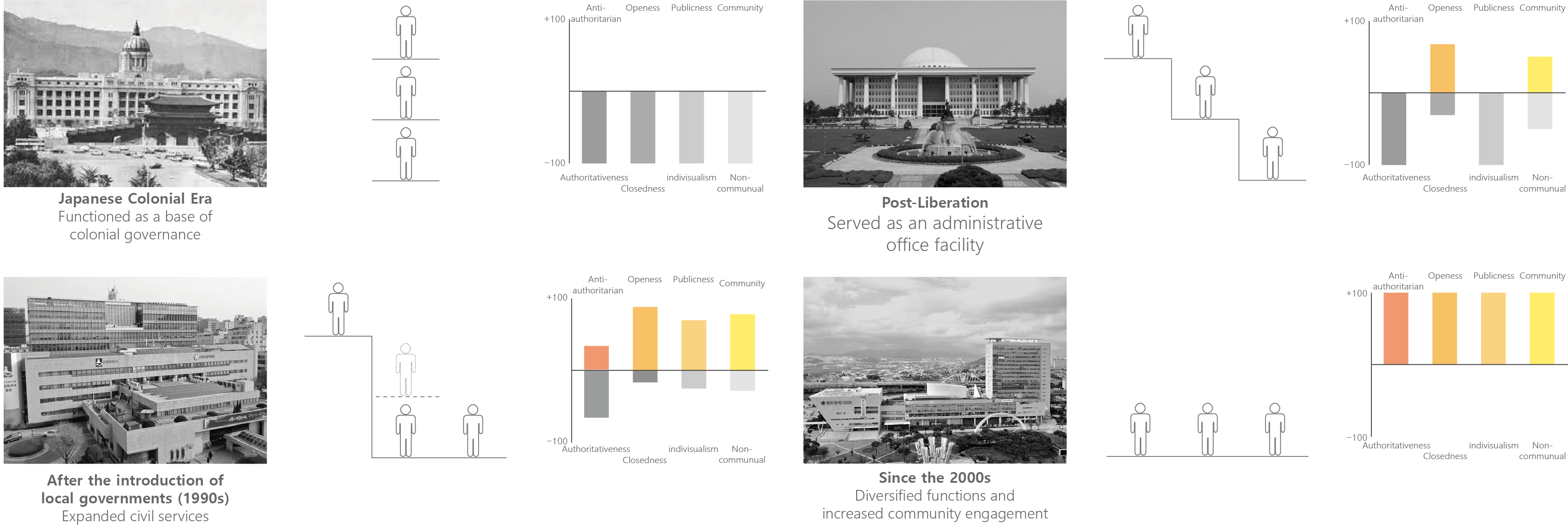
Public office buildings in South Korea have evolved from their origins during the Japanese colonial period—marked by hierarchy and closed-off structures—to become more open, community-oriented, and public-serving spaces. Especially at the local level, government buildings are making greater efforts to offer spaces for citizens. However, questions remain as to whether these efforts are truly reflected in the spatial design. Thus, it is time to propose a new type of public building: a genuinely open and inclusive civic space—what we call a “Flat” public office, where hierarchy is flattened and accessibility is prioritized.
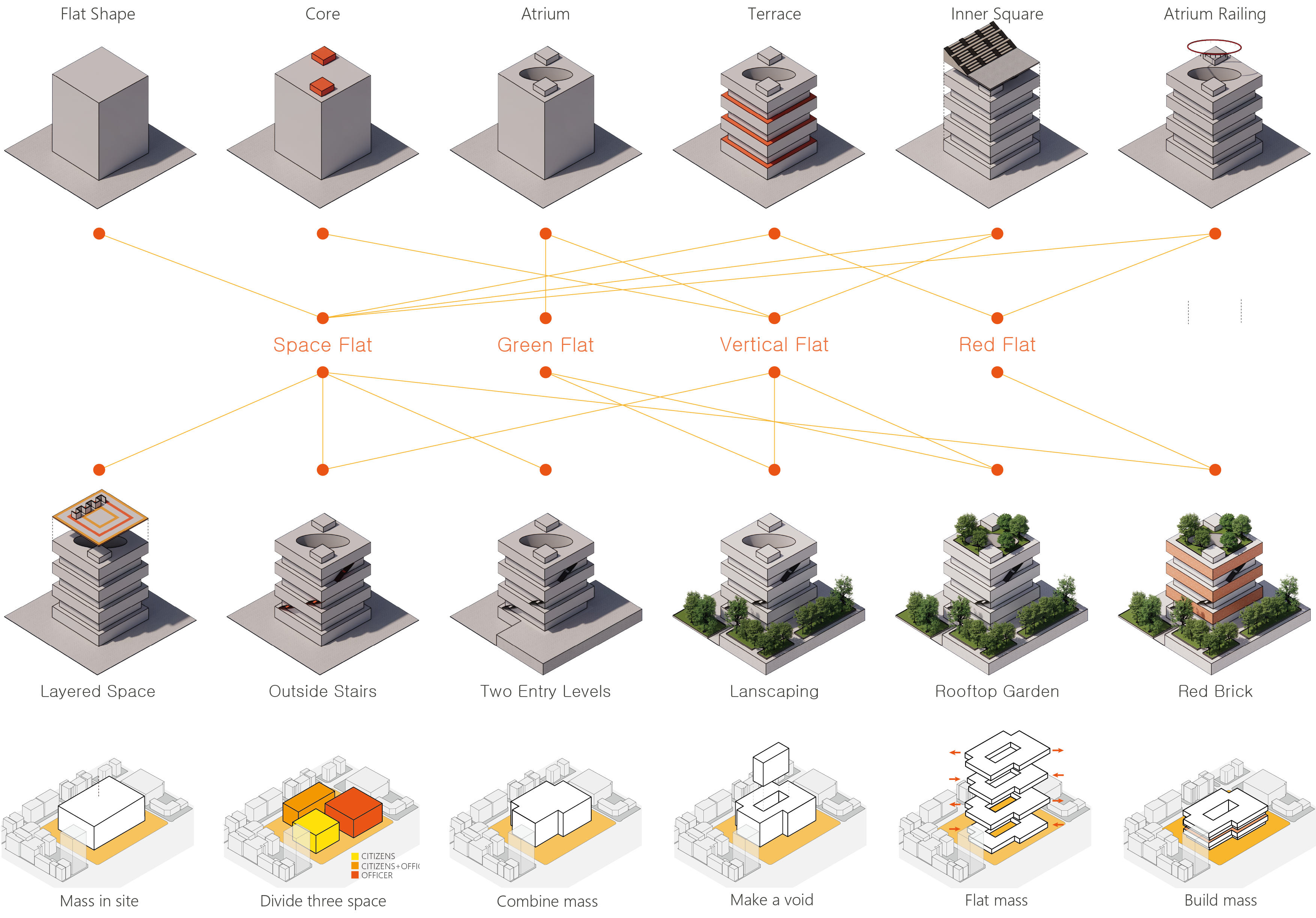
"Space Flat" represents the concept of integrating all horizontal planes within the building, allowing local residents to freely experience every level and space of the public office. "Green Flat" refers to the incorporation of greenery and outdoor spaces throughout the site, forming a continuous green walkway that offers both rest and connection to nature for the community. "Vertical Flat" ensures that all vertical spaces within the building are accessible and usable by the public, encouraging a more approachable and open perception of the municipal office. Lastly, "Red Flat" emphasizes the continuation of local identity by preserving materials and architectural language from the existing structure, reflecting the history and context of Seo-gu in Incheon. Based on these four "FLAT" concepts, specific design elements were derived and incorporated into the massing strategy for the new government office.
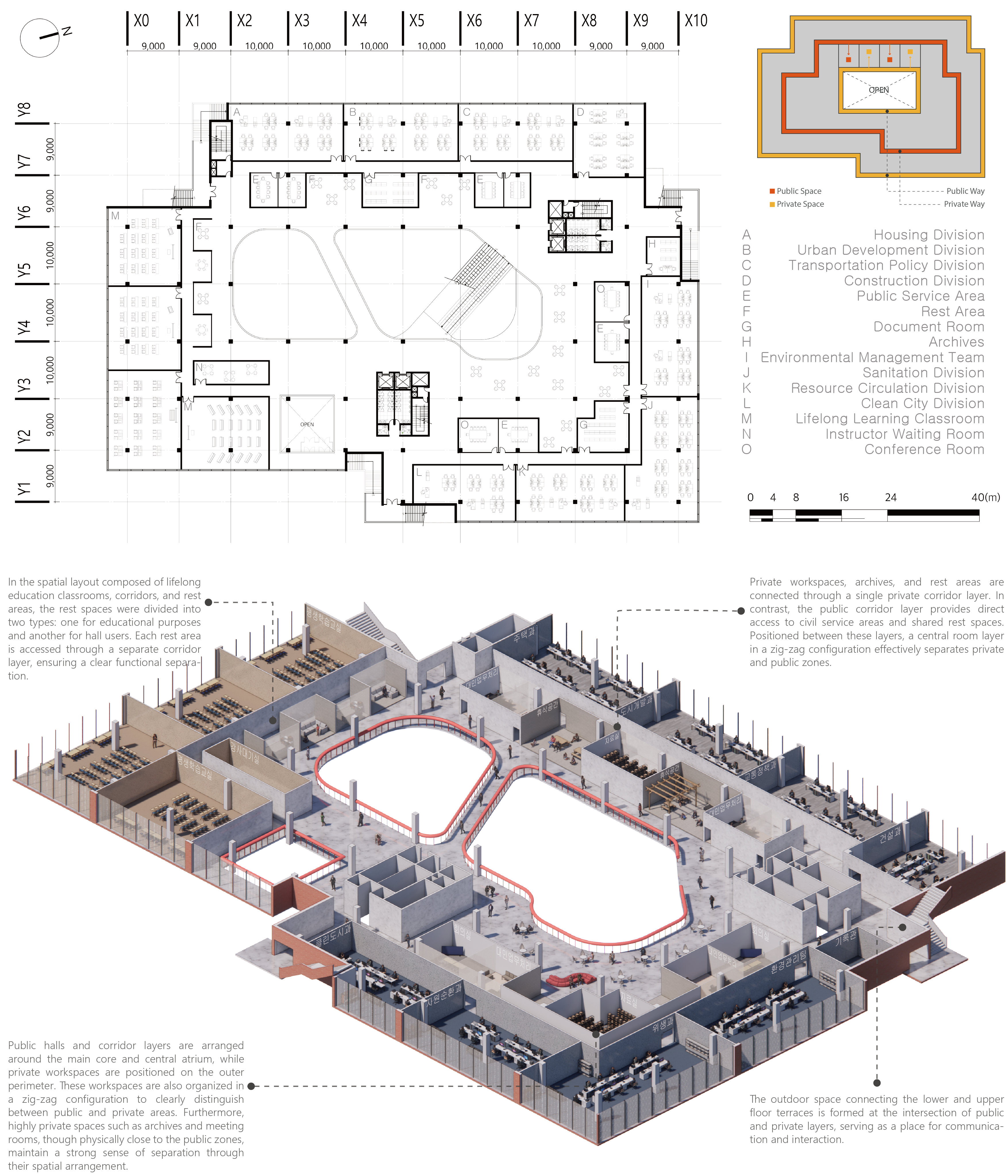
Public office buildings typically consist of workspaces, civil service areas, and community zones, each varying in degrees of privacy and public accessibility. Traditionally, these buildings have been organized with a vertical hierarchy that separates public and private spaces by floor level. However, this often limits public access to the full facility, reinforcing the perception of government buildings as uncomfortable and unapproachable.
The core idea of ‘Space Flat’ addresses this issue by proposing a horizontal “layering” system within a single floor plan. Programs are arranged based on their level of public accessibility, rather than stacking by hierarchy. In addition, clearly defined circulation paths for each user group further reinforce this spatial order, creating a more open and comfortable public office where all residents can access and experience the entire building.
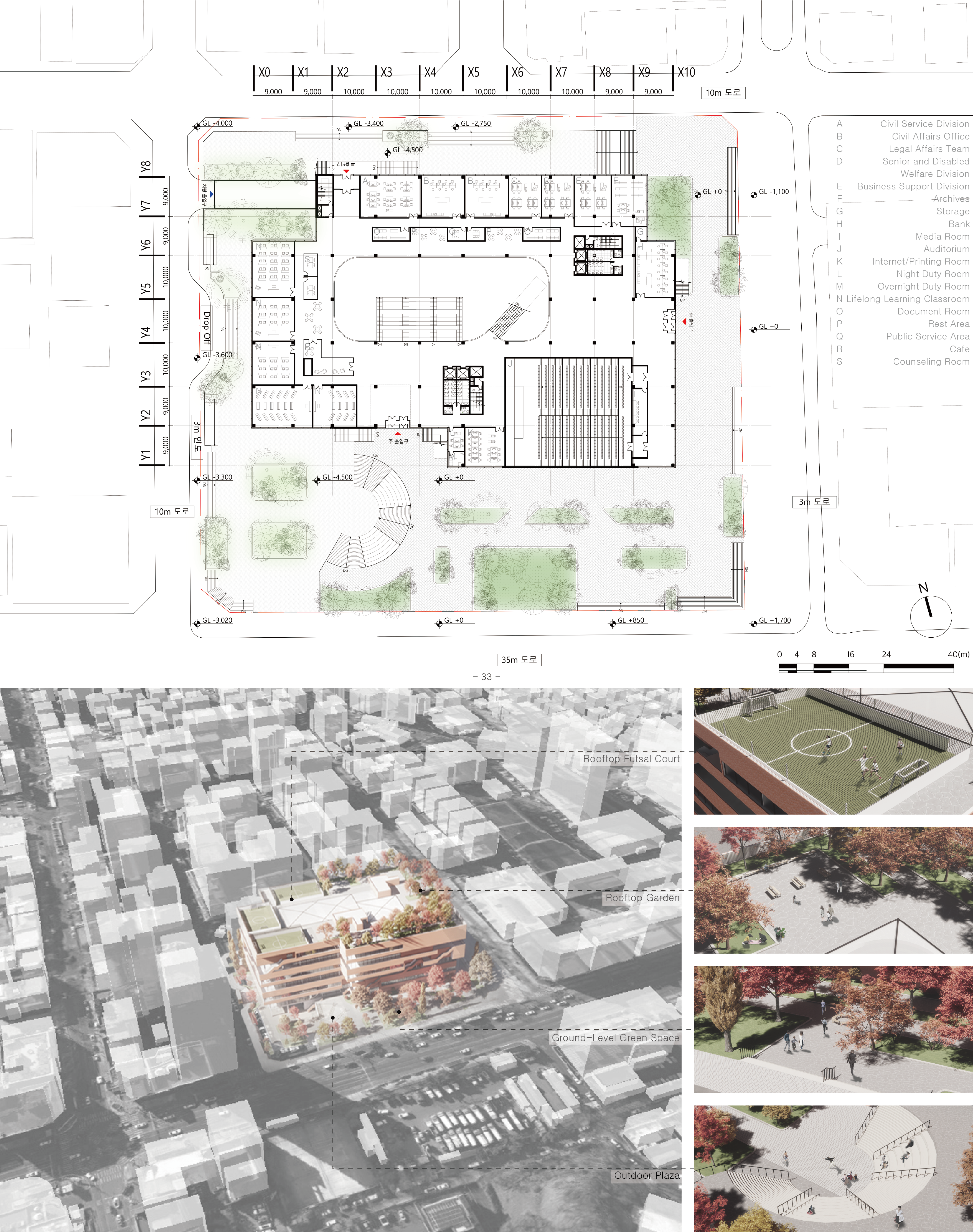
As a central hub for the local community, public office buildings have a responsibility to provide pleasant green spaces for both residents and public officials. In response to this, the concept of “Green Flat” proposes two key types of green spaces.
The first green space is located at the entrance level. Two different entry levels—GL-4,500 and GL±0—are designed to include generous greenery and public plaza programs, creating a welcoming community space and a daily resting place for locals. The second green space is found on the rooftop. Through rooftop greening and the addition of recreational programs such as a futsal field, the top floor of the building is transformed into another public relaxation area.
Together, these upper and lower green spaces fulfill the “Green Flat” vision while also contributing to the realization of the “Vertical Flat” concept—encouraging users to experience the building vertically through connected green areas from ground to roof.
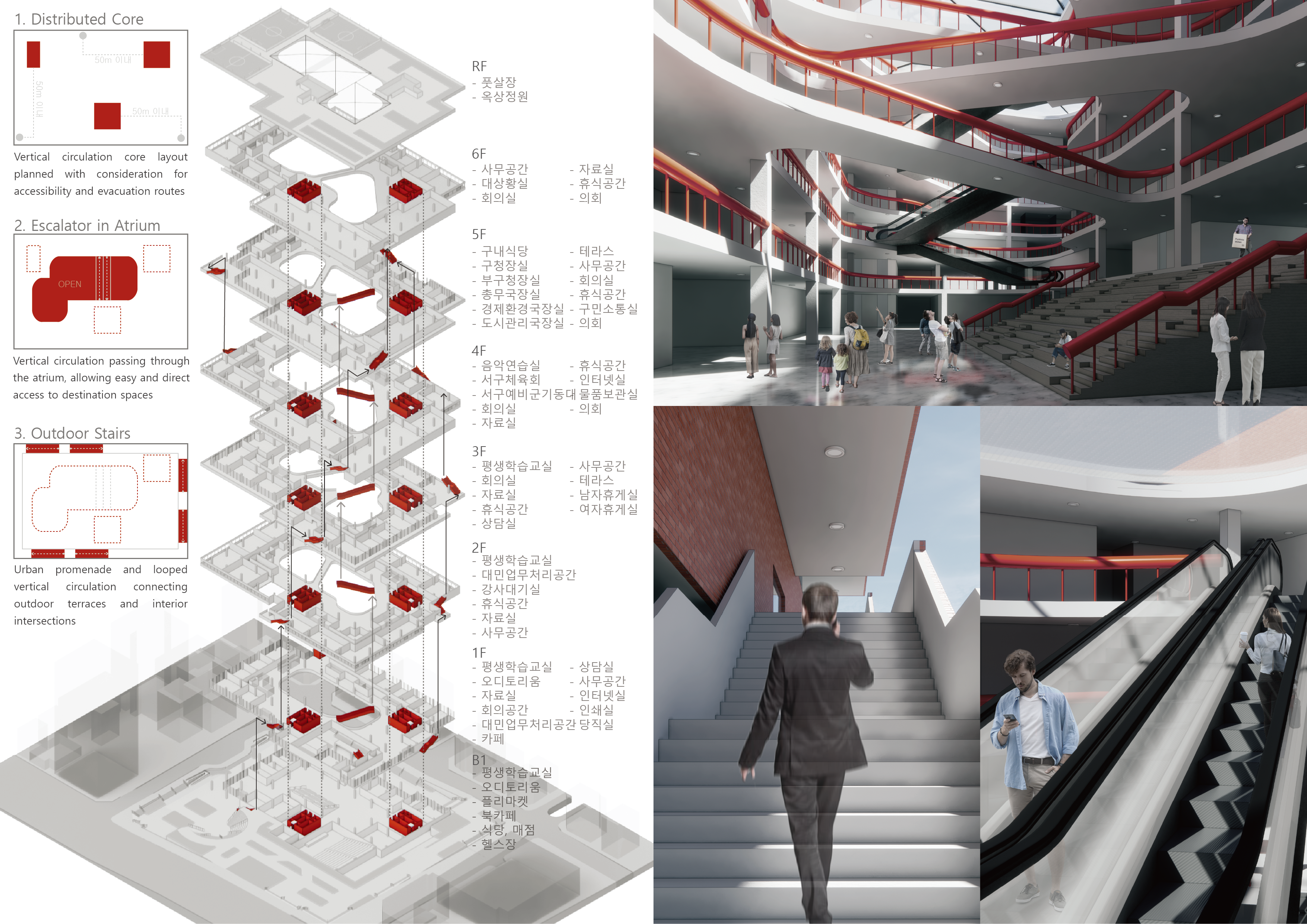
Vertical Flat is a concept that opens up all vertical levels of the building to the public, allowing local residents full access to every floor of the district office. This is achieved through three main strategies.
First, three vertical circulation cores are distributed throughout the building, enabling free and direct access from any entrance. Second, a central atrium and escalators are incorporated, following a department store-like layout, allowing citizens to move vertically and freely for various tasks. This open configuration also provides visual accessibility that encourages more comfortable use of the space. Lastly, outdoor staircases wrapping around the exterior serve as a vertical promenade, enhancing visual and physical access from the outside and encouraging natural, flexible building use.
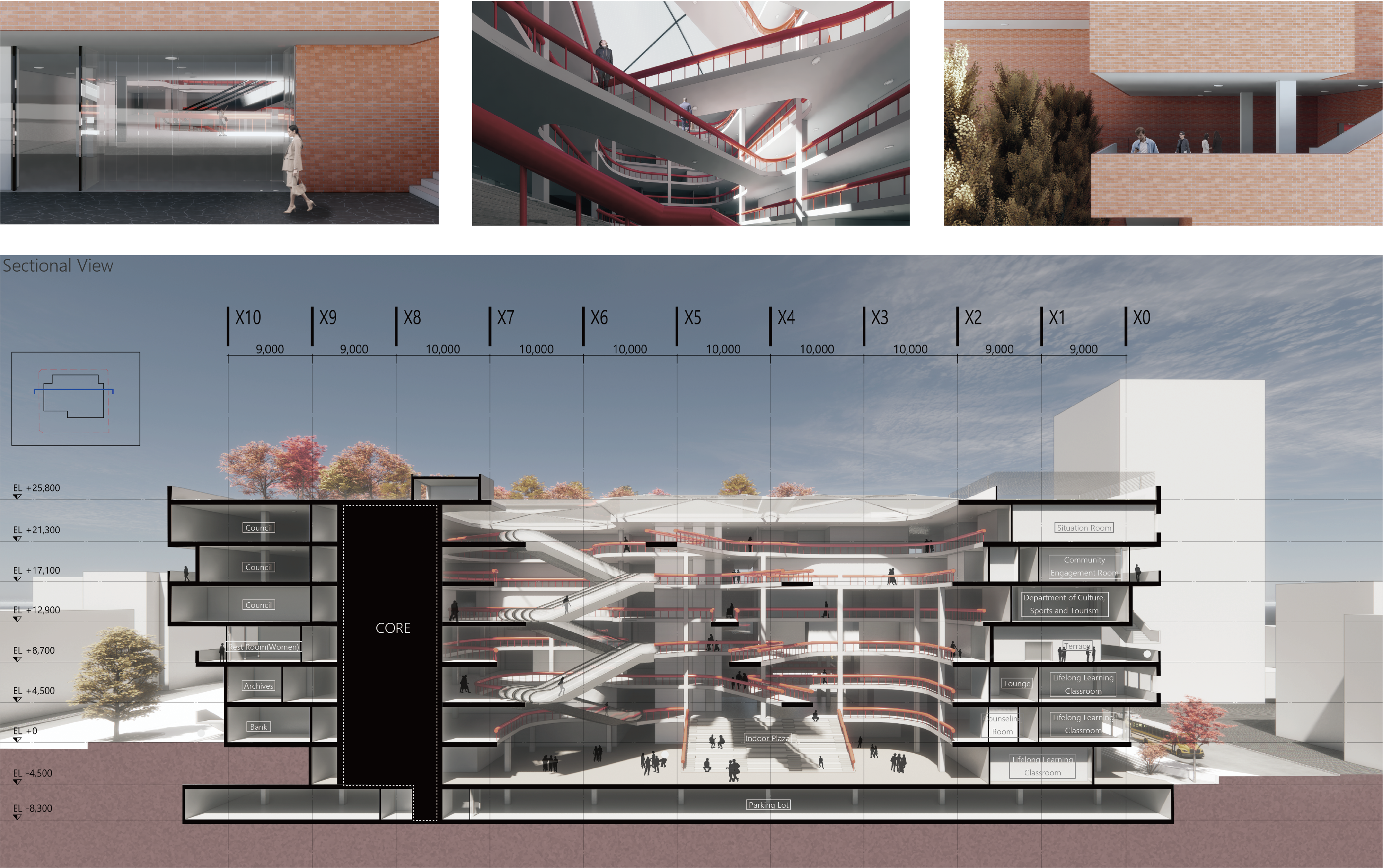
Red Flat represents the identity and historical continuity of the Seo-gu District Office in Incheon. Red bricks have long been used throughout Seo-gu, and the district office itself has a red brick facade that is familiar and meaningful to the local residents. The layered red brick exterior symbolizes not only physical construction but also the accumulated material and immaterial efforts of the community. To preserve this identity, the existing red brick facade will be maintained, and reusable bricks from the current building will be repurposed during the reconstruction process.
Inside the building, red railings in the central atrium are introduced to achieve visual continuity between the interior and exterior. These railings also serve a practical function, displaying signage that indicates the location of various departments, thus acting as intuitive visual guides for visitors.
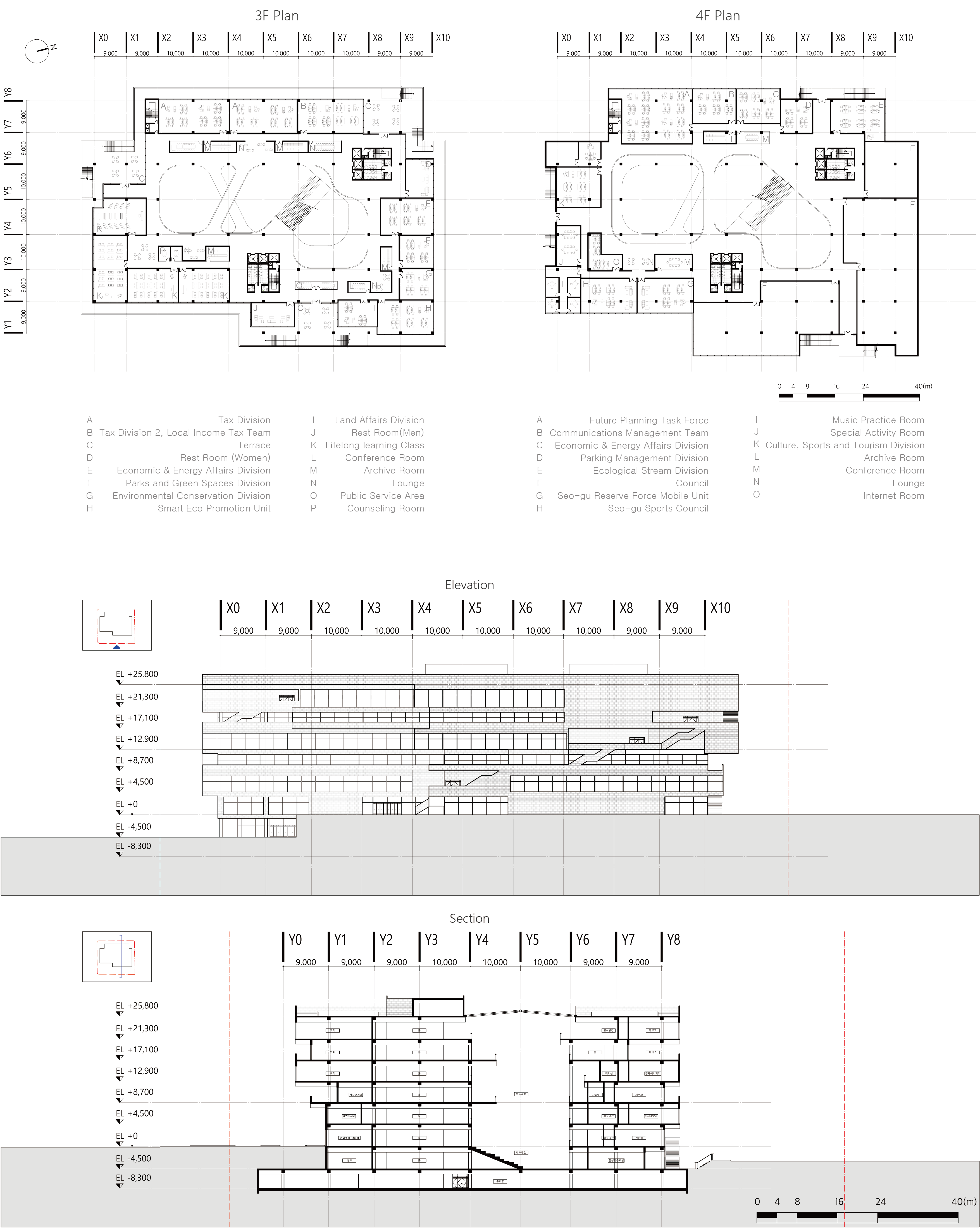
This project, a reconstruction plan for the Seo-gu District Office in Incheon, was initiated with a fundamental question: “What should a public office building represent in today’s society?” The answer we arrived at was clear — it must be a space that feels comfortable, accessible, and open to all local residents.
During the planning phase, I reflected on my own experiences visiting public offices for administrative tasks, as well as those of people around me. These reflections highlighted spatial inefficiencies and a general sense of inaccessibility, which led to the development of the four FLAT strategies — Space Flat, Vertical Flat, Green Flat, and Red Flat. These strategies aim to make the entire building fully accessible to residents, while maintaining a clear distinction between private and public zones.
This proposal is more than a structural renovation; it’s a redefinition of the role and identity of public architecture. By honoring the district’s historical context while embracing new social and environmental values, the design envisions a future-oriented public space that truly serves its community.