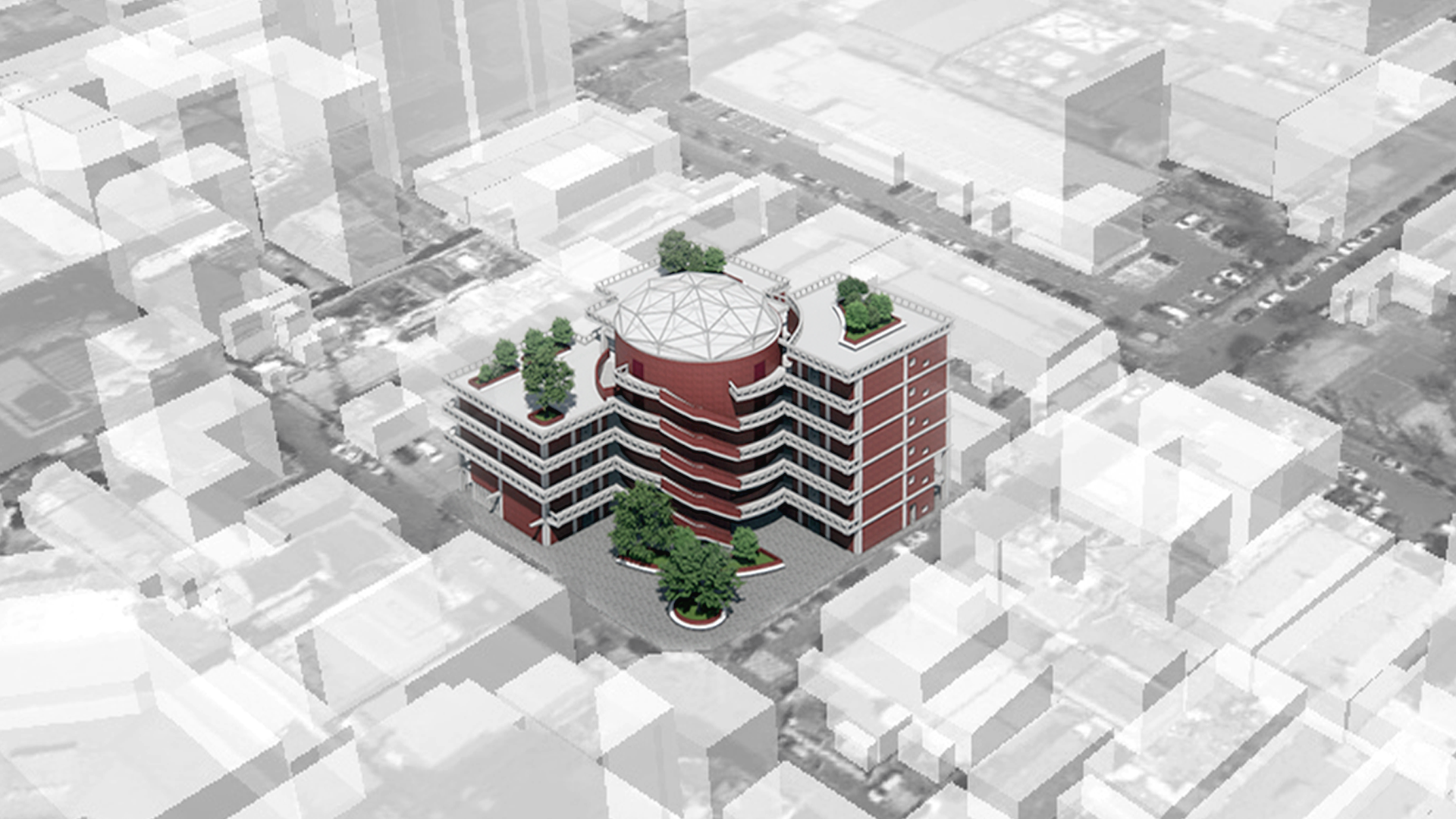
Seongsu-dong, a district where the past and future coexist amid diverse transformations, has recently been designated as an “IT Industry Promotion Zone,” positioning itself as a hub for future industries. At the same time, Seongsu-dong is gaining attention as a cultural hotspot—home to fashion, cuisine, and repurposed spaces. In line with this evolving identity, we propose a multi-functional cultural facility centered on IT and e-Sports, tailored to the unique character of the region.
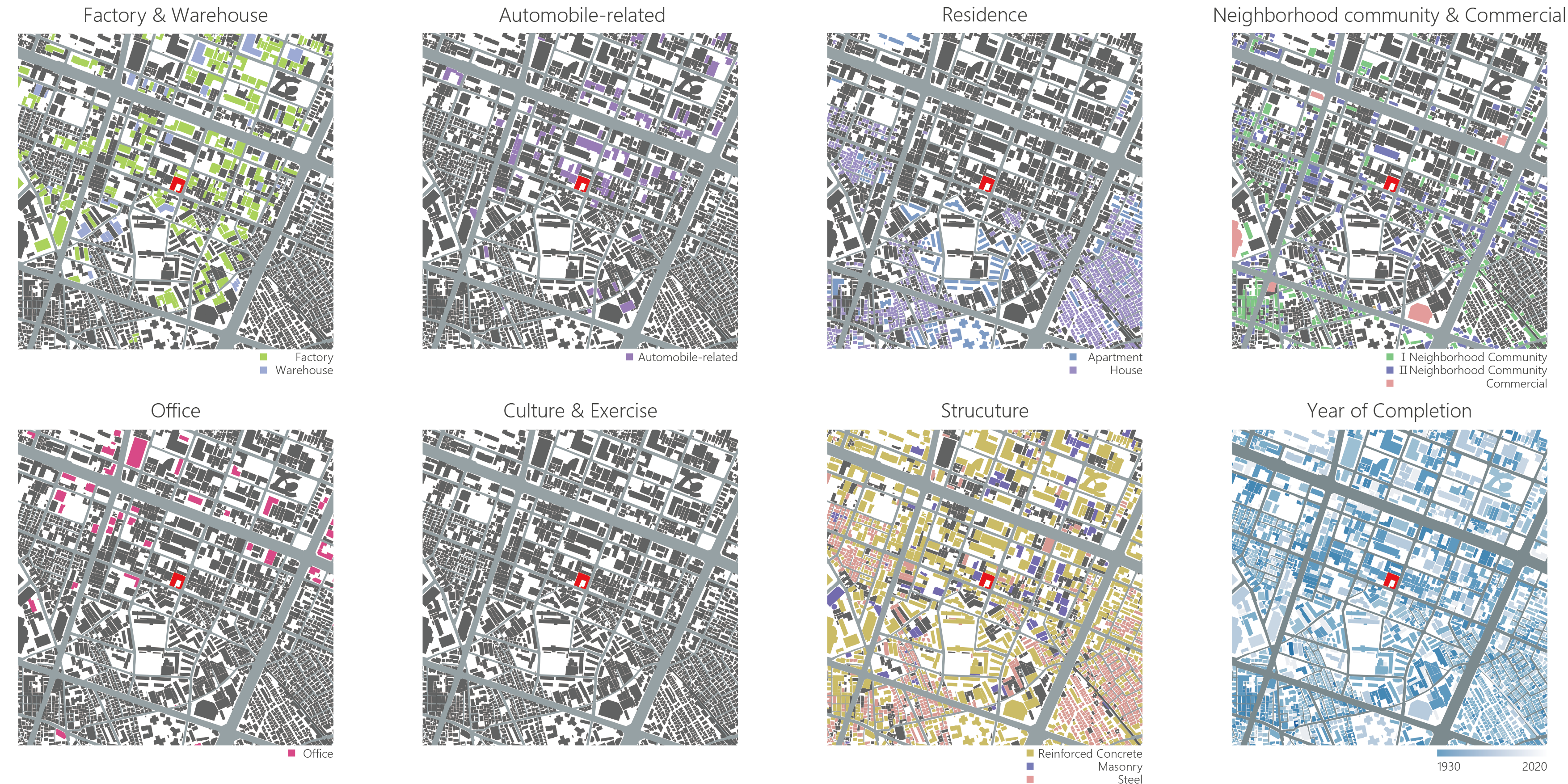
The project site is located approximately 500 meters in a straight line from Seongsu Station and is adjacent to Yeonmujang-gil. Situated in a semi-industrial zone, the area is characterized by a mixture of building types serving diverse functions. To the south lies a concentration of residential buildings, while the north is predominantly occupied by office facilities. Neighborhood amenities and commercial spaces are evenly distributed around the site, though more densely located near the residential zones. Factories, warehouses, and automobile-related facilities are clustered close to the site, indicating their longstanding presence in the area.
This reveals a gradual transformation in Seongsu-dong’s urban structure—from traditional industrial facilities like factories and warehouses, to automobile-related industries, and now toward IT-focused workplaces and residential-commercial mixed-use developments that support a live-work lifestyle. In conclusion, the future of Seongsu-dong lies in embracing new industries while preserving the area’s unique local identity.
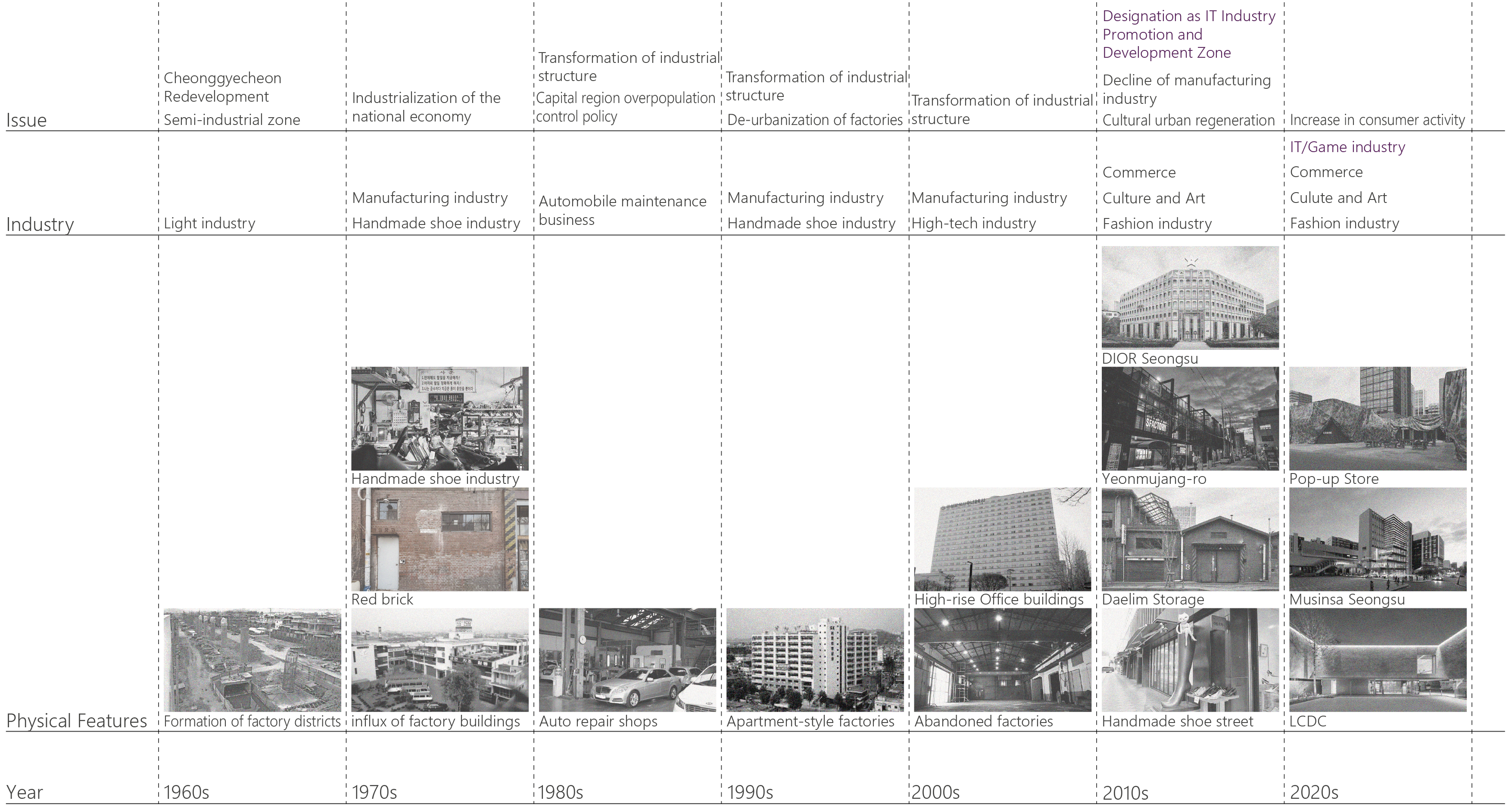
Seongsu-dong has evolved through various industries over time. Initially established as a hub for light industry with factories and warehouses, it has gradually transformed into a center for cutting-edge sectors such as IT and gaming. Since the 2000s, shifts in industrial structure have rendered many of Seongsu-dong’s physical characteristics obsolete. However, rather than erasing its industrial identity, the area has embraced a new direction—repurposing former production spaces into places of consumption. Today, Seongsu-dong is progressing by integrating new industries while retaining its historical context. As the district enters the 2020s with a focus on the IT and gaming sectors, it is essential to plan cultural and consumer spaces that align with this future-oriented growth.
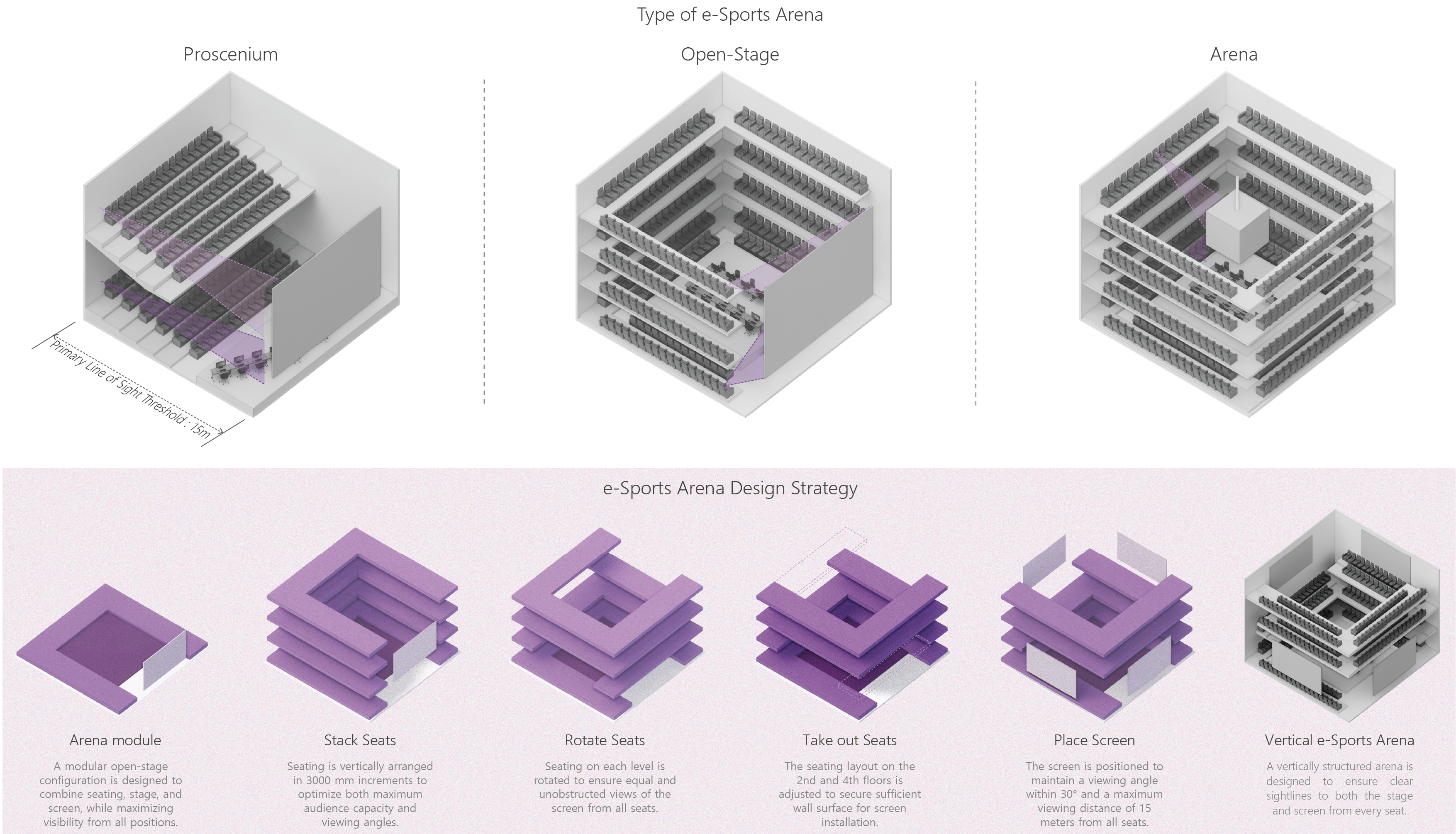
According to the Standard Model Study for Dedicated e-Sports Arenas, seating layouts can be categorized into three types: Proscenium, Open-Stage, and Arena. In all cases, seats must be arranged within the primary visibility limit line from both the stage and the screen. Additionally, every seat must provide an unobstructed view of the players on the stage and the game broadcasted on the screen.
However, within a confined arena space of 15×15×16 meters, it becomes difficult to meet these visibility requirements using traditional seating layouts found in existing e-Sports venues. Therefore, a new spatial configuration is needed to accommodate a vertically oriented e-Sports stadium.
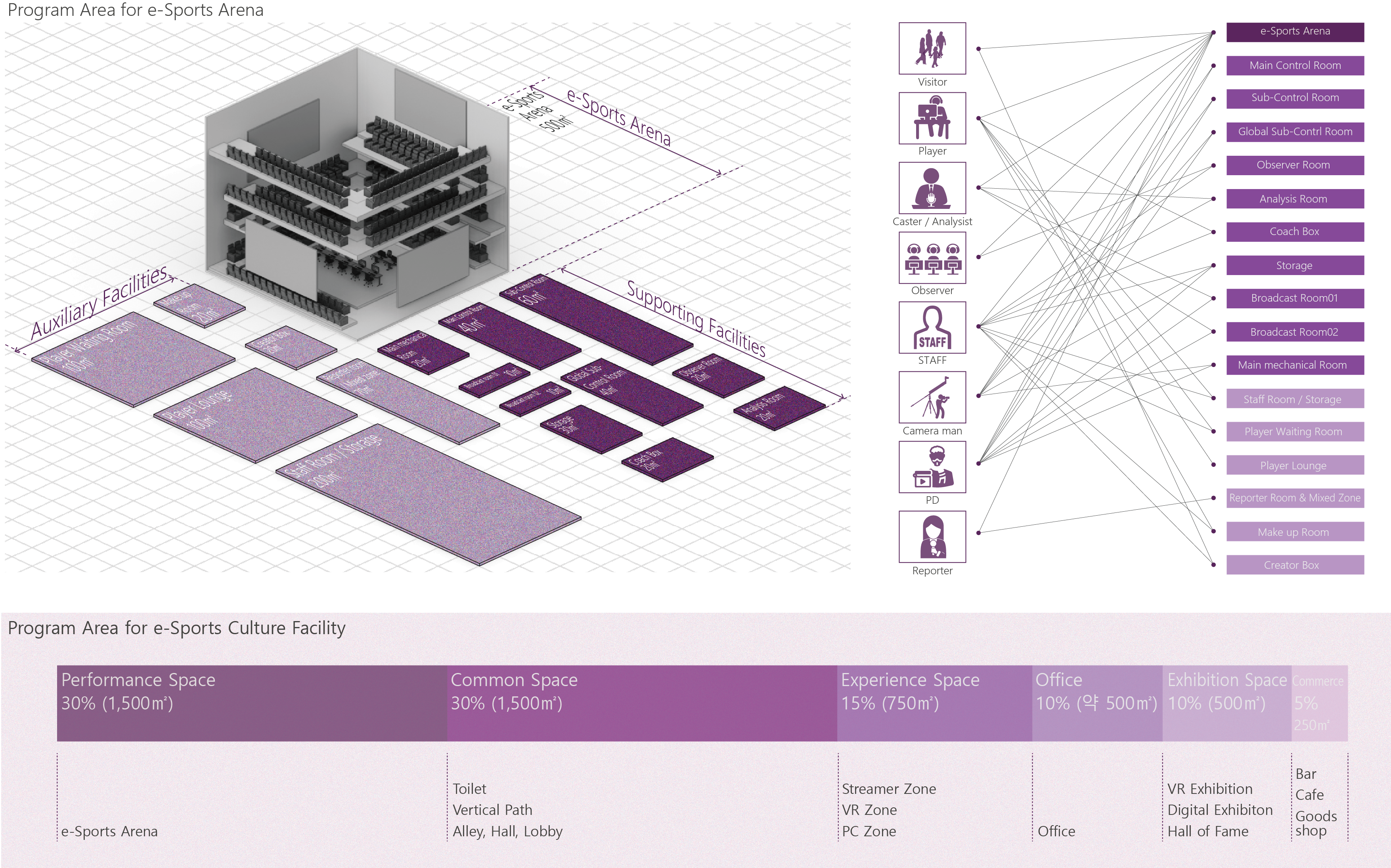
An e-sports match is not merely a competitive event—it is a complex system that brings together a wide array of stakeholders, each with distinct roles and spatial needs. From players and analysts to commentators, broadcast crews, and operations staff, every group requires dedicated environments tailored to their functions. In order to accommodate this diversity, the circulation paths must be carefully separated, and the purpose of each space must be clearly defined. Based on this analysis, the required programs were categorized by user type, and specific floor areas were allocated accordingly. This approach served as a foundational step in establishing a comprehensive and functional design strategy.
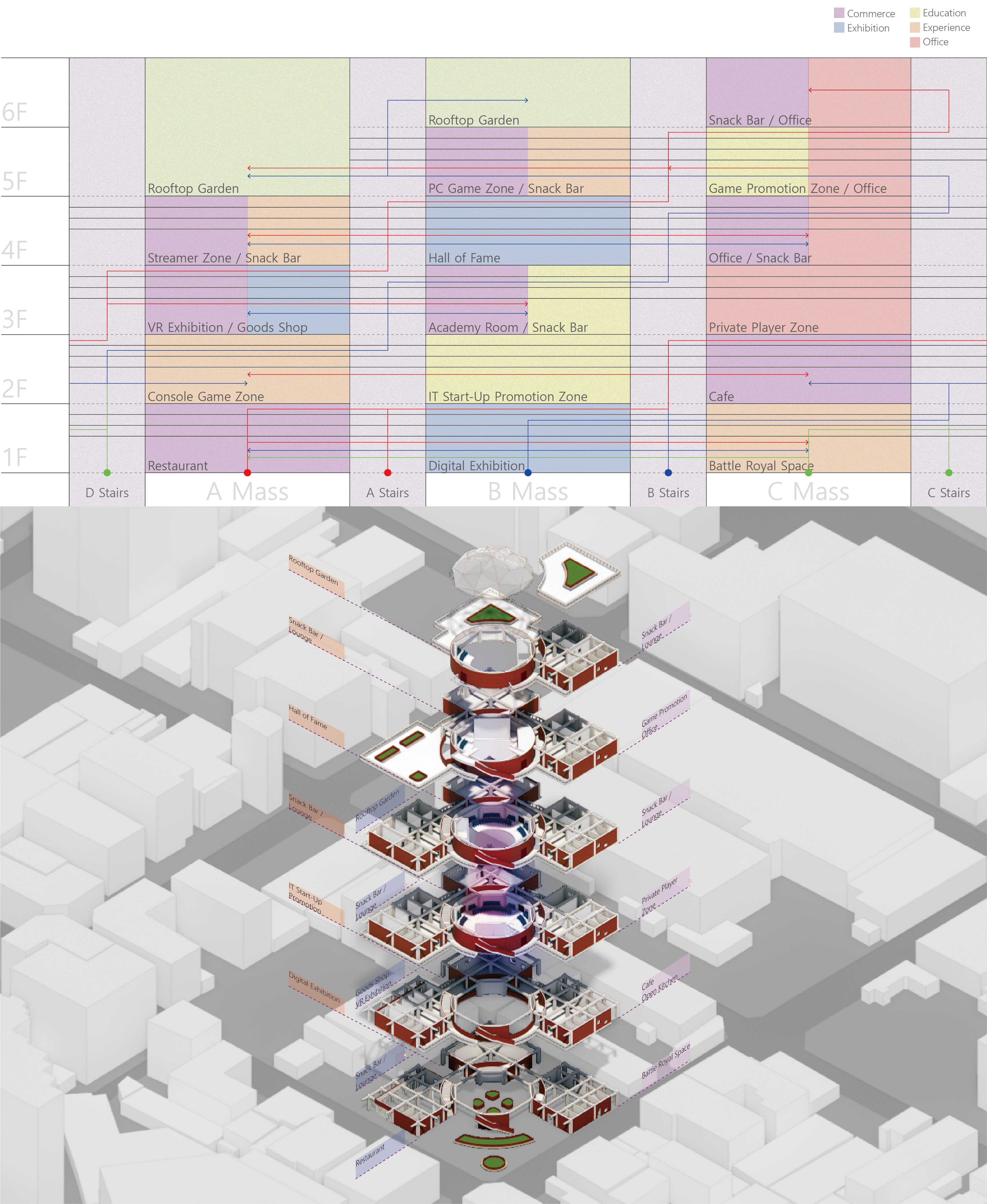
Centered around the main performance space, four circular circulation staircases are strategically placed to allow users to access various areas either selectively or sequentially. Rather than assigning identical programmatic functions to each mass, spaces with interconnected functions are arranged along the spiral circulation, creating an algorithmic spatial experience. The repetitive rhythm of these circular staircases encourages visitors to explore the entire cultural complex organically, while also facilitating efficient crowd dispersion and enhanced safety during performances with large audiences. This spatial strategy, referred to as "Space Algo-Rhythm," offers a rhythmic and dynamic flow that promotes flexible navigation and effective use of space within the multi-purpose cultural facility.
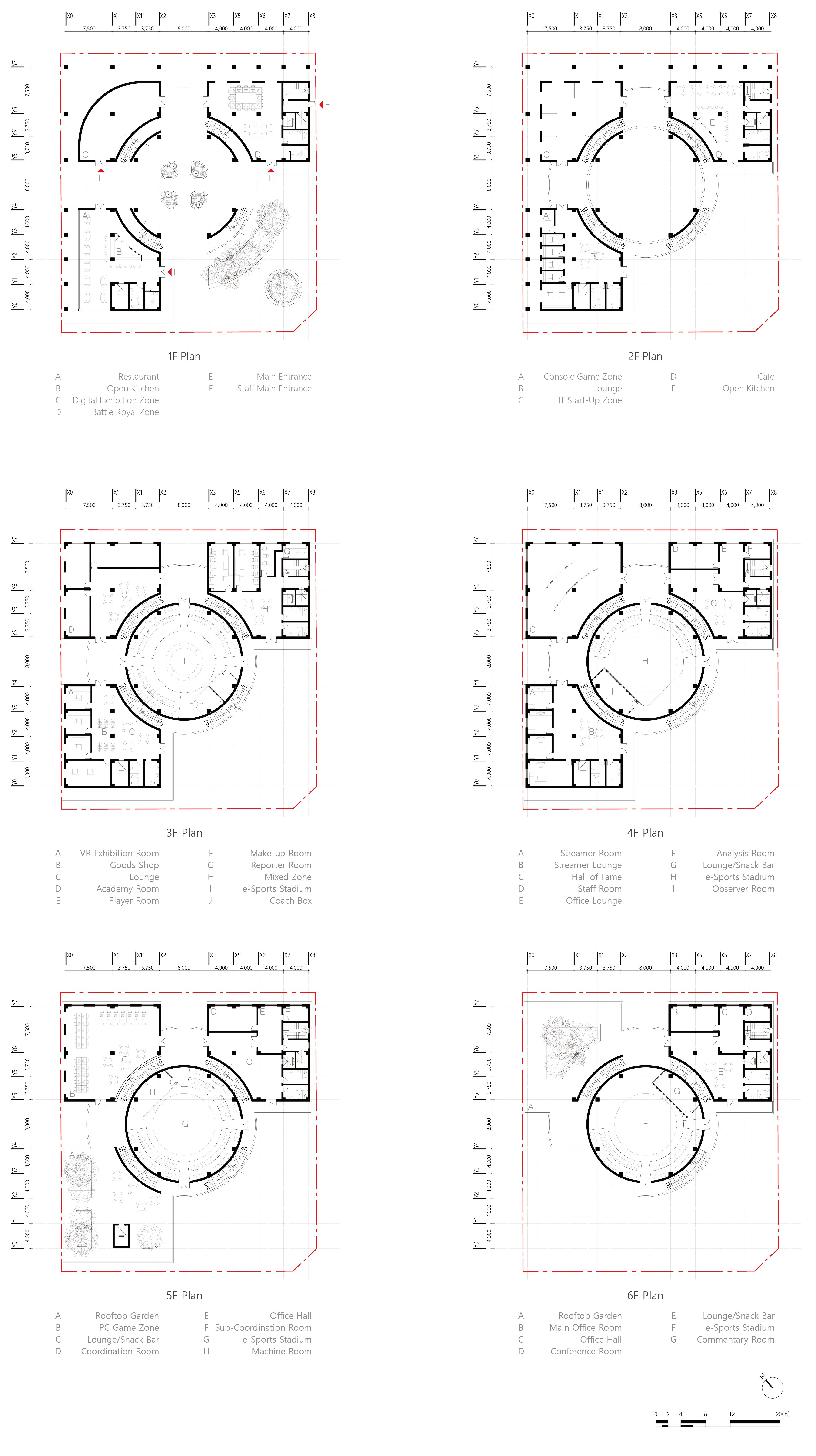
This project was conducted as a preliminary study prior to writing my master’s thesis, stemming from an initial interest in e-sports as an emerging cultural content. With the rapid growth of the e-sports industry and increasing cultural consumption, I recognized the need for a dedicated facility to support such activities. The location—Seongsu-dong—was considered particularly suitable due to its unique urban characteristics and evolving industrial identity, making it an ideal site for the proposed program.
The central focus of the design was how to maximize the spatial efficiency of the complex as a cultural venue, allowing users to experience as much of the space as possible. Given the nature of e-sports, where large crowds may gather at specific times, careful consideration was given to evacuation strategies, circulation flow, and the accommodation of high user density.
The thesis later evolved with refined direction and more detailed development, and the final version of the master’s thesis is provided in the PDF attached below.